Category Archives: Escalante Family History

Heritage and Our Part in America

In the next few months you will hear the media discuss the topic of “Heritage.” The boiled down version of this phrase will be applicable to the “European American” experience. Many in charge of current immigration policies have had family in the US for a hundred years or less. I tend to roll my eyes at this point because half of my family has been meandering around the North American continent for centuries now. And once the borders were moved around them we can say we’ve been American for centuries.

This is about the Escalante family and our Heritage in what is now the United States of America – The Quick Tutorial.

The oldest generation that I can find directly in the Escalante family tree that was born in North America is my 6th Great Grandmother, Juana Heredia. She was born in Minas de San Juan, Sonora, now called Cumpas, in about 1685. That is 340 years ago. She married the OG Juan de Escalante. They build their life in Northern Sonora, New Spain, approximately 120 miles from the border. As they stayed in what is now Mexico, let’s look at locales in the United States.

Here are places that our ancestors were:

#1 – A set of 7th of great-grandparents were granted land in what is now Pascagoula, Mississippi, in the late 1710s. The land went to their daughter Marie-Josèphe LaPointe and her husband Hugo Ernestus Krebs. The LaPointe Krebs house was built in 1757 in Pascagoula, Mississippi. That is 20 years before the New England colonies decided to declare independence from England.
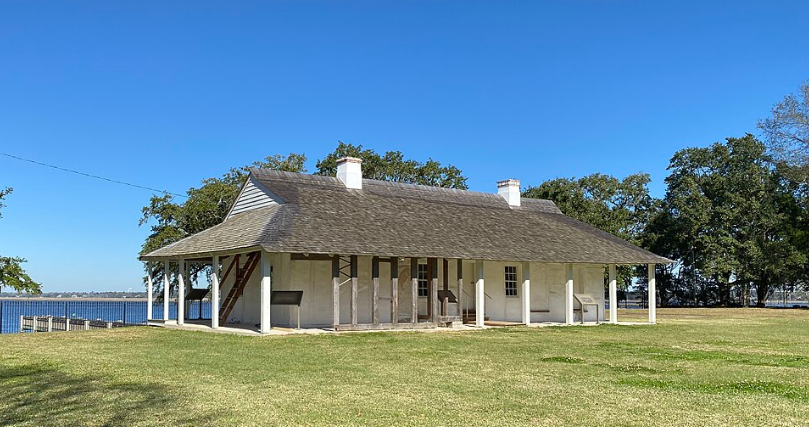
The LaPointe Krebs house – Pascagoula, Mississippi.

#2 – Their daughter Marie Krebs married Antoine Narbonne. He was in the French Navy. There is a very good chance he was stationed at Fort Conde in what is now Mobile, Alabama. He had a plantation north of the area as well. Narbonne’s son-in-law, Don Enrique Grimarest was the “Political and Military Governor of the Town of Mobile and its District” in 1783. He was our uncle by marriage and worked at the fort and ran Mobile. When Enrique’s wife died, he took his young brother-in-law, Narbona, with him to Sonora to work for Spain’s military.
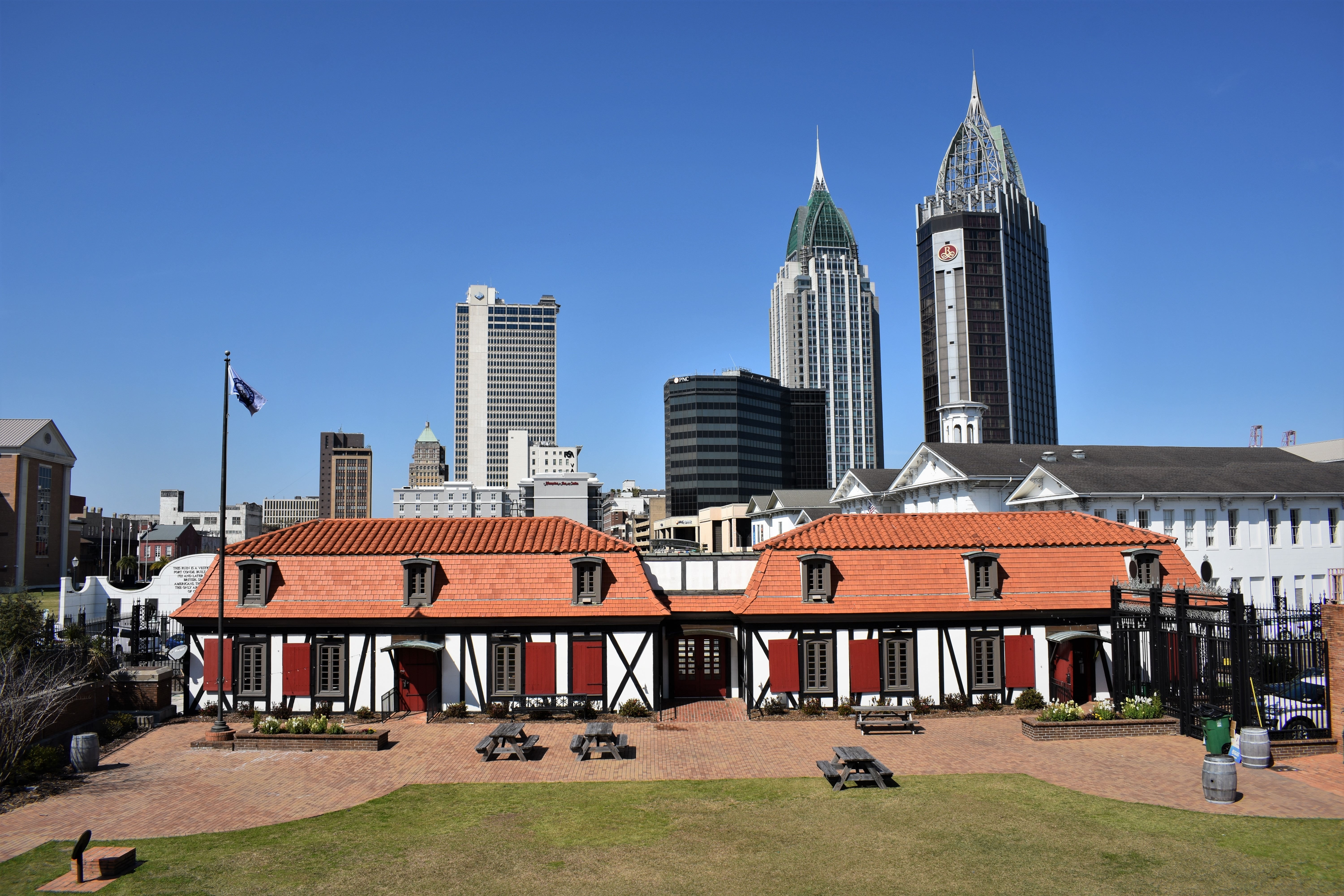
Fort Carlota when Grimarest was in charge under Spanish rule. The current museum in a 4/5 size replica of the original fort.

#3 – The King of Spain sent a group of settlers from the Canary Islands to the presidio of San Antonio, now Texas, in 1731. In 1738 the cornerstone was laid for the Cathedral of San Fernando on the original plaza. It was finished in 1755. This historical church was built for these settlers. My Moczygemba cousins are descendants of the original families from the Canary Islands when John (Johann) Moczygemba married Maria Carmen de Cadena (the link to these original settlers). Panna Maria, Texas, was settled by Polish immigrants invited to the area by John’s brother, Father Leopold Moczygemba, in 1854.
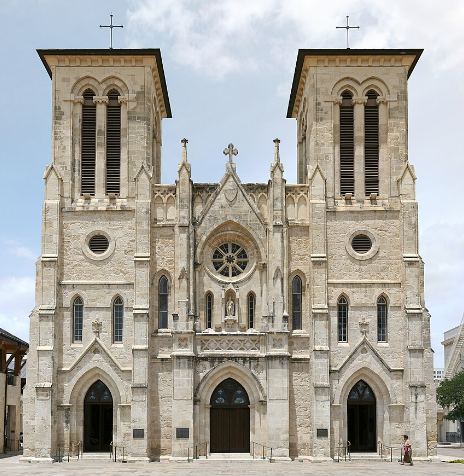
San Fernando Cathedral, Downtown San Antonio, Texas

#4 – In 1781, great-aunt Maria Ygnacia Marzela Escalante married the Captain of the Presidio of Tucson. Their marriage was captured in the graphic novel “Tucson: Dragones Del Desierto” by Ferran Brooks and Daniel Tomas. The back reads: “This is the history of the city of Tucson, it’s dragons and its captain, Pedro Maria de Allande y Saavedra.”
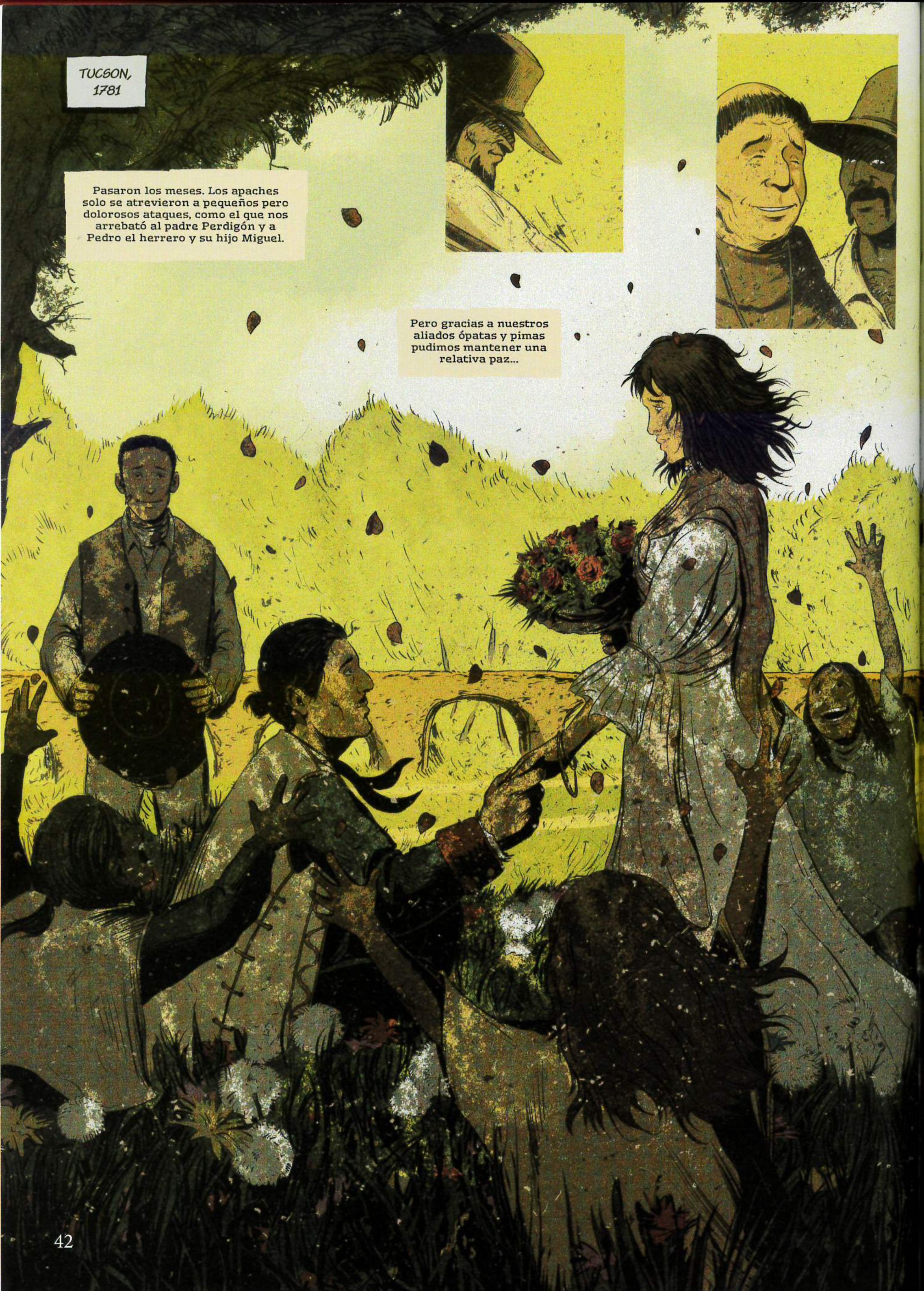
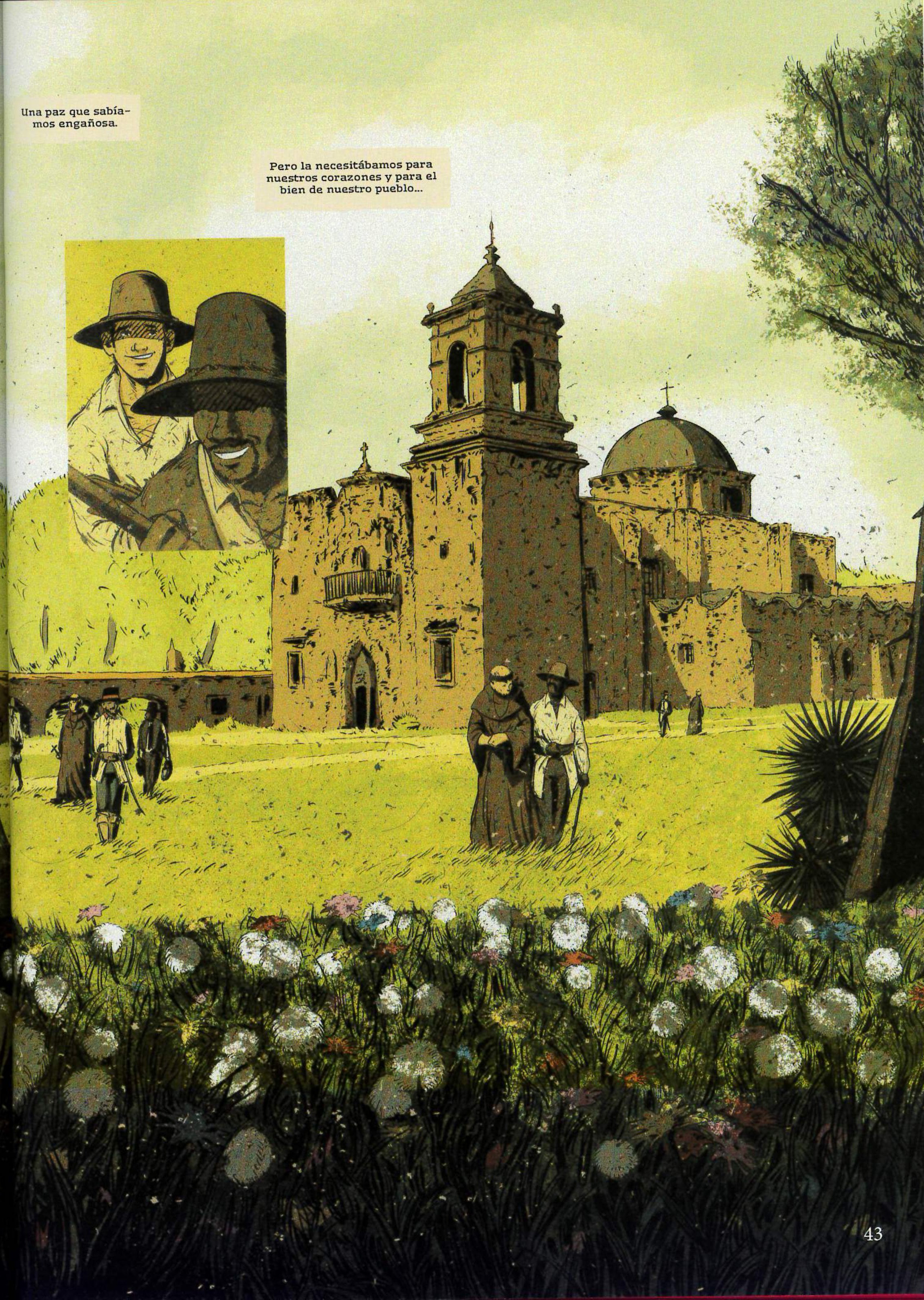
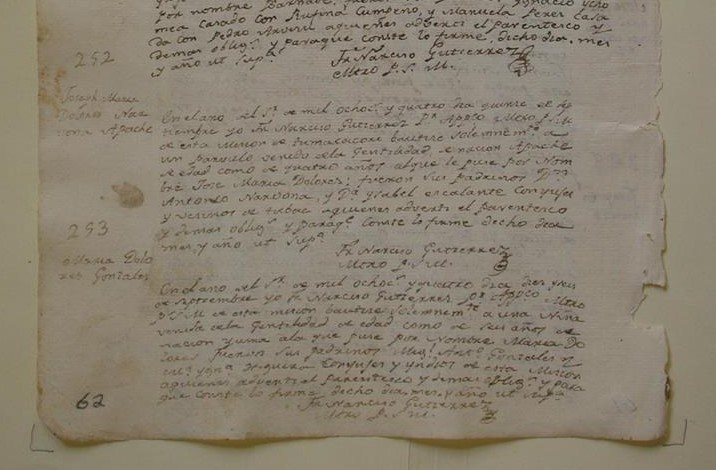
#5 – In 1804, Antonio Narbona and his wife Ysabel Escalante (4th great-grandparents) baptized an Apache boy they named Jose Maria Dolores Narbona. The boy was baptized in the Tumacácori church. The Narbona’s lived in Tubac. These towns are now in Southern Arizona.
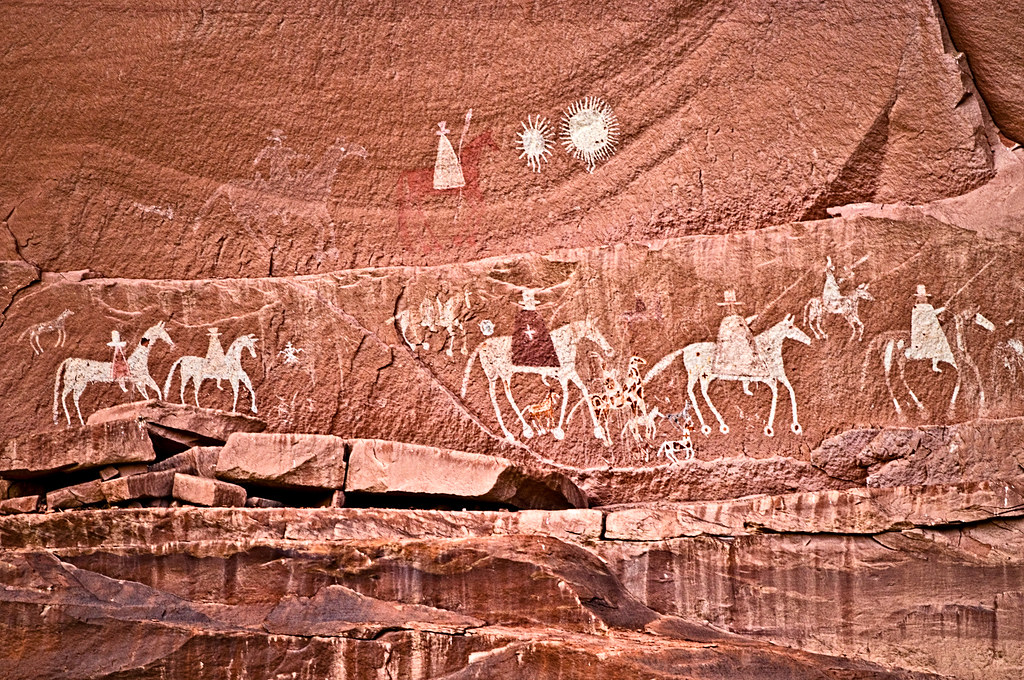
#6 – In 1805, Narbona went to the Canyon de Chelly. He committed atrocities against the Navajo people who documented the war party after the massacre.
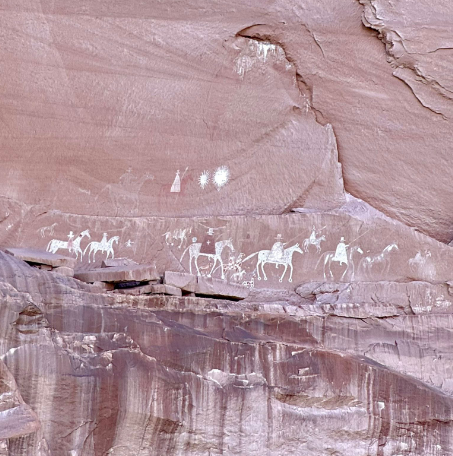
Pictograph of Narbona expedition at the Canyon de Chelly.

#7 – Antonio Narbona got promoted for his continued military successes. He became governor of New Mexico and resided in the Palace of the Governors in Santa Fe from 1825-27. Construction on the building started in 1618.
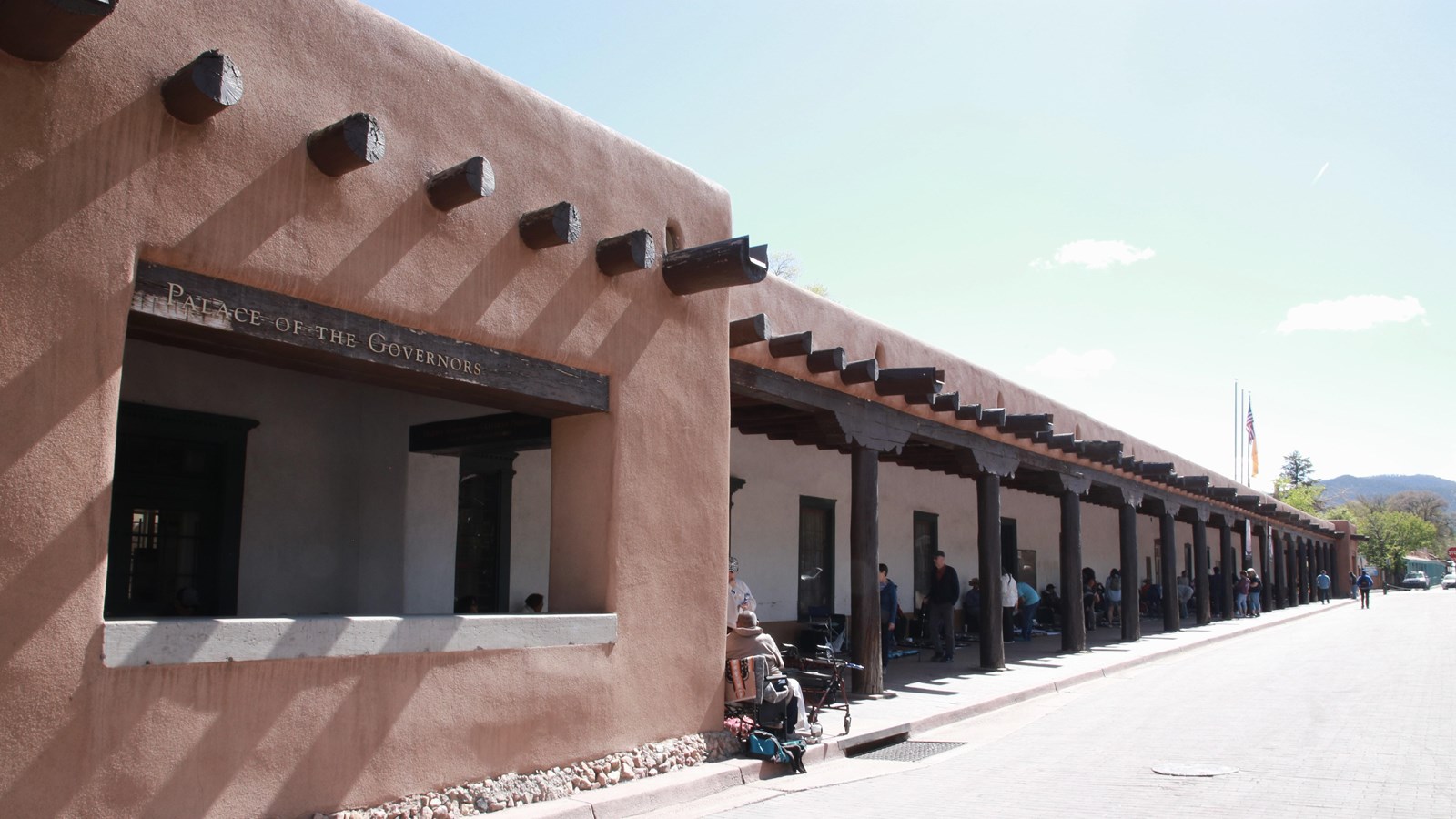
Palace of the Governors, Santa Fe, NM. Photo from the NPS webpage.

Escalante’s worked hard to stay Spanish/European, marrying family to stay that way. More recent Escalante family members married into families with Native American roots. We know that Native family members have been here for millennia. Leonardo and Rufina married in Tombstone, Arizona, in 1887, only to settle in California in 1900, still 125 years ago.

Why am I posting this? When you hear the phrase “Heritage” in the media, be reminded they aren’t thinking about our family. At all. Some of us “pass” as Anglo-Americans and don’t really have to address the “where were you born” issues. Some of us don’t pass.

For those who have to explain themselves often or when you get asked this question:
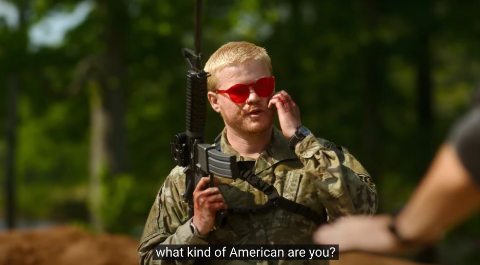
your answer is: We come from Americans who built this country. Our family built the southwest and shall continue to do our best, for all Americans.

Following the Science to New Family

Howdy! After quite a few tornadoes in Oklahoma this year, a calmer summer season is on the way. We were very fortunate that only one small tornado was even close to us. However, we had my dear friend from California visiting at the time. While a bit shaken, she took the tornado warnings very well.

Our garden is going strong. Tomatoes are coming on. A few peppers have been harvested. We took a mini-break to San Antonio. I bought a purple bougainvillea at the Swap Meet. It’s beautiful.

Let’s get to it.

Every person has two parents. They have four grandparents. If they are lucky, they know quite a bit about each of these people. My mom had a pretty good knowledge base about three of her four grandparents. The one that was always a mystery was her maternal grandfather.

Family lore said that Jose Ismael was from Syria. His paperwork from Hermosillo Civil Registration materials and the Catholic church documented that he was from Turkey. Looking at the below map of the Ottoman Empire, I can see how it might have been a game of: let’s guess where the new immigrant to Mexico originally came.

The details of Jose’s life are very limited. He married Jesus Corral (Mama Chu) in 1913. He owned a store in Hermosillo so he must have arrived to Mexico a few years before that to get his business established. The couple had 4 children, 3 who lived to adulthood. Mama Chu said that he was shot and killed during a card game. That was when she came to Arizona.

That was all we knew. Before you get your hopes up, that is still all we know.

However.

A few weeks before Mom passed, I was able to tell her about a DNA match she had. I reached out to this DNA match. The person who is in charge of his results told me that our new cousin was from Lebanon. Wait. What?! My whole foundation just took a hard right turn. Our cousin gave us advice on which area the family could be from and which surnames for which to look.

I did do that. And it helped an awful lot.

Apparently quite a few Ancestry DNA tests had been given as gifts to more of my distant family because I now have about 15 surnames that come up as matches! Here are the facts. The relatives aren’t from Turkey. Like our distant cousin said these matches come from Lebanon.

I googled “Lebanese in Mexico” and so much information popped up. Have you ever seen the culinary delight that is Al Pastor being made on the rotating spit? That’s the Lebanese loving their new land. You are welcome. Hahaha! Salma Hayek is of Lebanese descent, and well she is kind of amazing too.

I have recently wondered if Jose’s name was Yusuf (the Arabic name for Joseph, Jose in Spanish) and he used the Spanish when he arrived to Mexico. The surname of Ismael could be from his father’s first name, listed as Ismael Ale in the records. Our family picked up the spelling Ysmael in the United States.

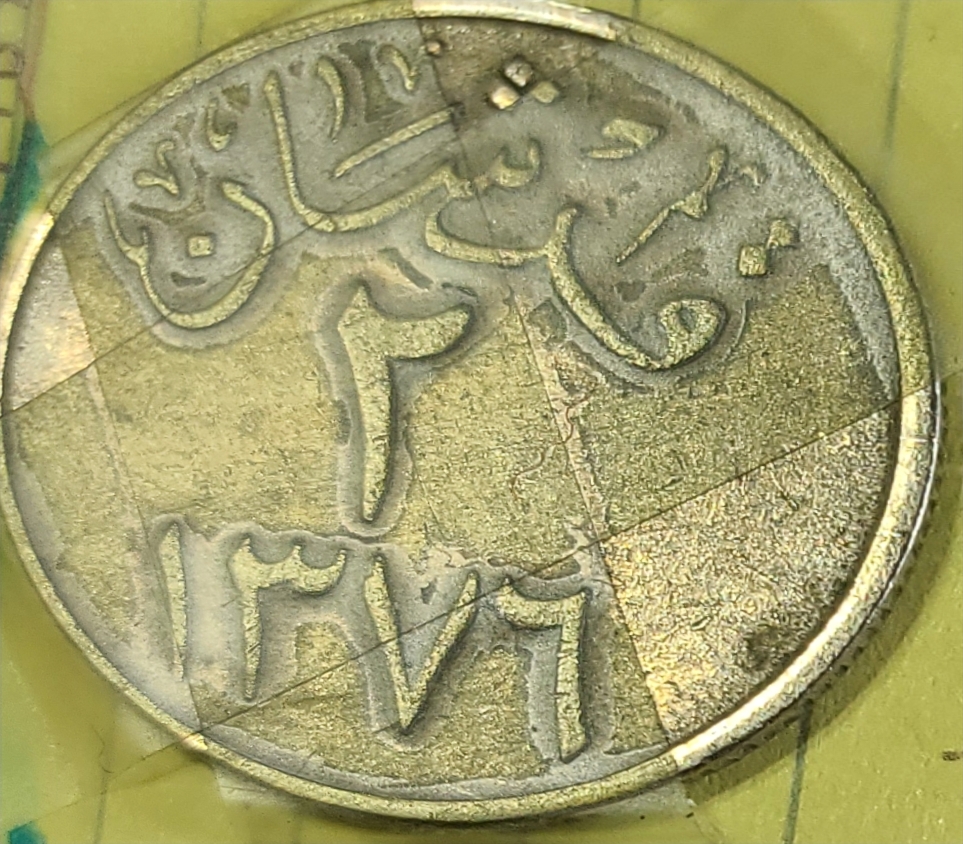
Mom and I took a brief wander through her personal things in March. She showed me a treasured coin. Her grandmother had given her the coin and said, “This didn’t belong to Jose, but do you see this writing? It looks like how he used to write.”

Saudi Arabian Coin

I went through the genetic matches Ancestry is giving us and found the following surnames that are links to the Ysmael branch.

Not all of these matches have Family Trees associated with them. However, the ones that do all state that their families are from Lebanon. Cities that have connections: Tyre, Sour, Aabbassiyeh, and several from Beirut.

And it’s not like this is a small deal. Mom’s DNA was about 29% Levant. The green below is where Jose’s family is from regionally. The darker green is their concentrated location. My mom’s other DNA dominant region is Spain – also at 29%.

Do you have any idea how exciting this is for me?? Now I have a whole new continent to research. Somebody needs to warn them that their tenacious cousin knows where they are and she is ready to start sending her letters. I haven’t found the names Ali or Ismael in the matches. Maybe by elimination, and by gratuitously putting this post up, others will find me. Maybe one of them will know of the relatives who left their homeland for deeply personal reasons we will never know. Hopefully they will find me – Jose’s great-granddaughter who would LOVE to meet them. And find out what I can about them all.

Over some Tacos Al Pastor.

Other reading:

https://historicalmx.org/items/show/112#:~:text=The%20origins%20of%20tacos%20al,searching%20for%20better%20economic%20opportunities

https://en.wikipedia.org/wiki/Lebanese_Mexicans

Elia Edith Escalante

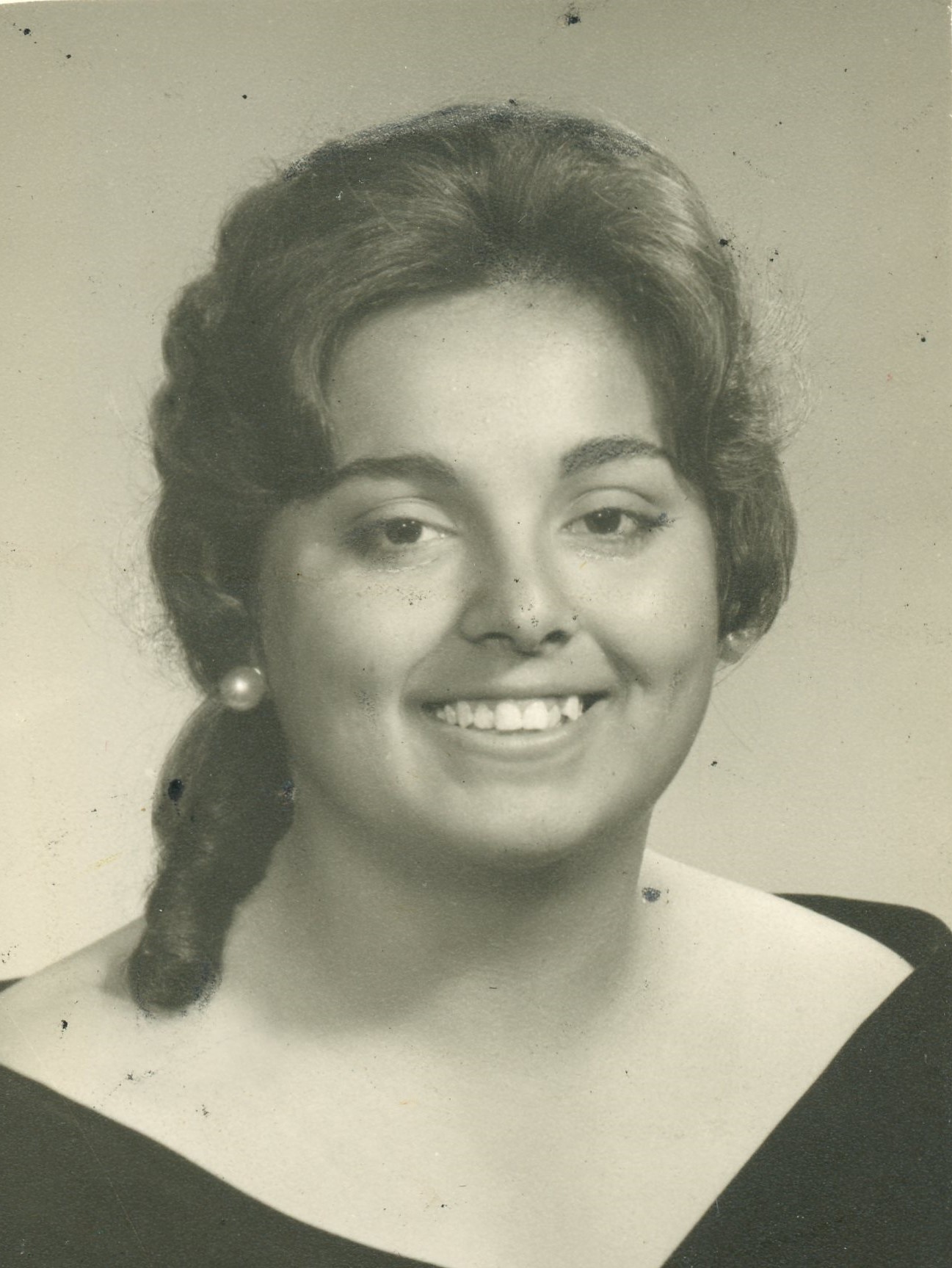
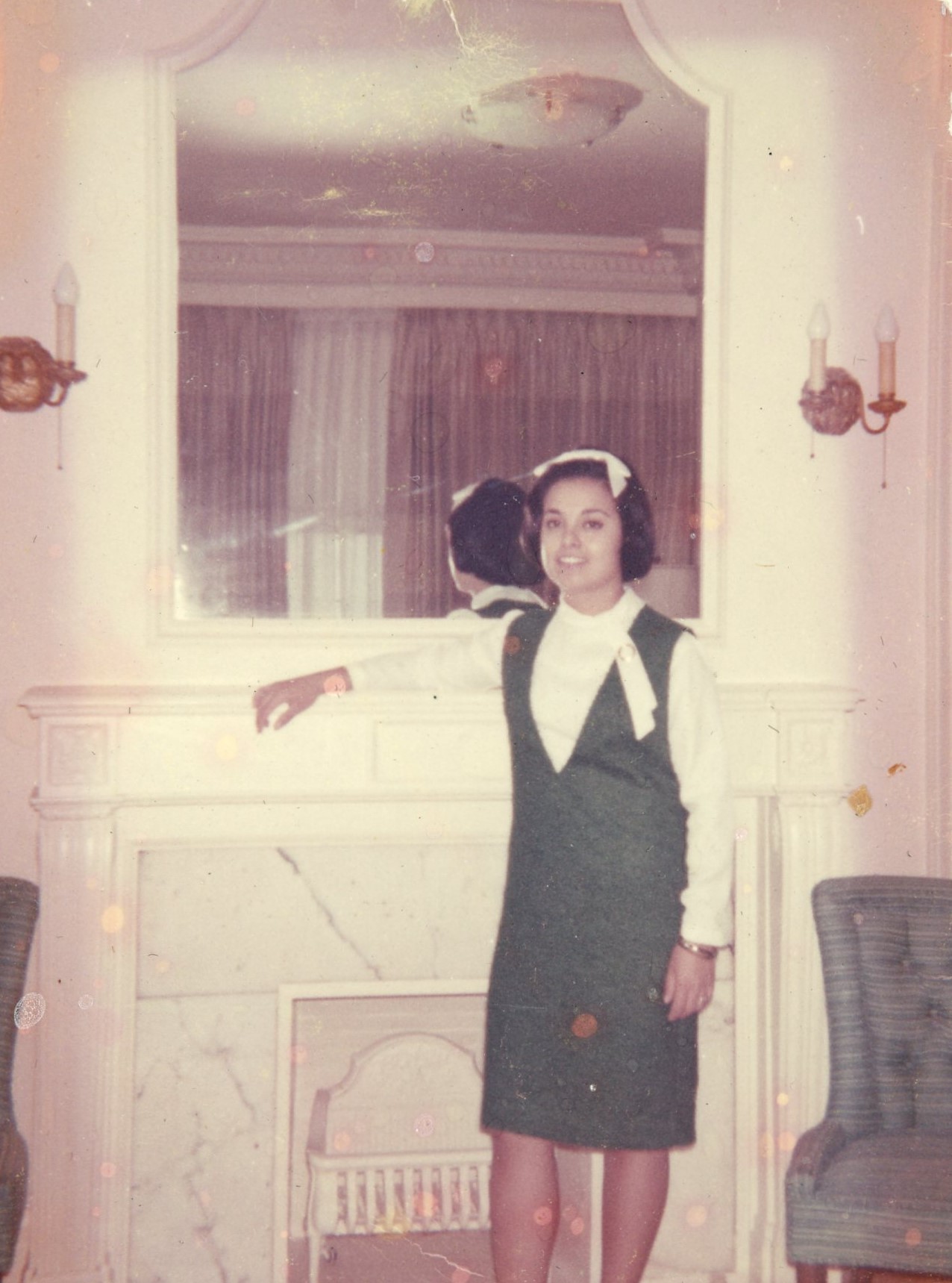
Edith Escalante was born on February 20, 1942 in Tucson, Arizona. She passed away peacefully at her home in Stillwater, Oklahoma, on March 26, 2024. She was born to her parents Albert (Tony) Escalante and Manuela (Nela) Ysmael. She was their second child, after her sister Frances.

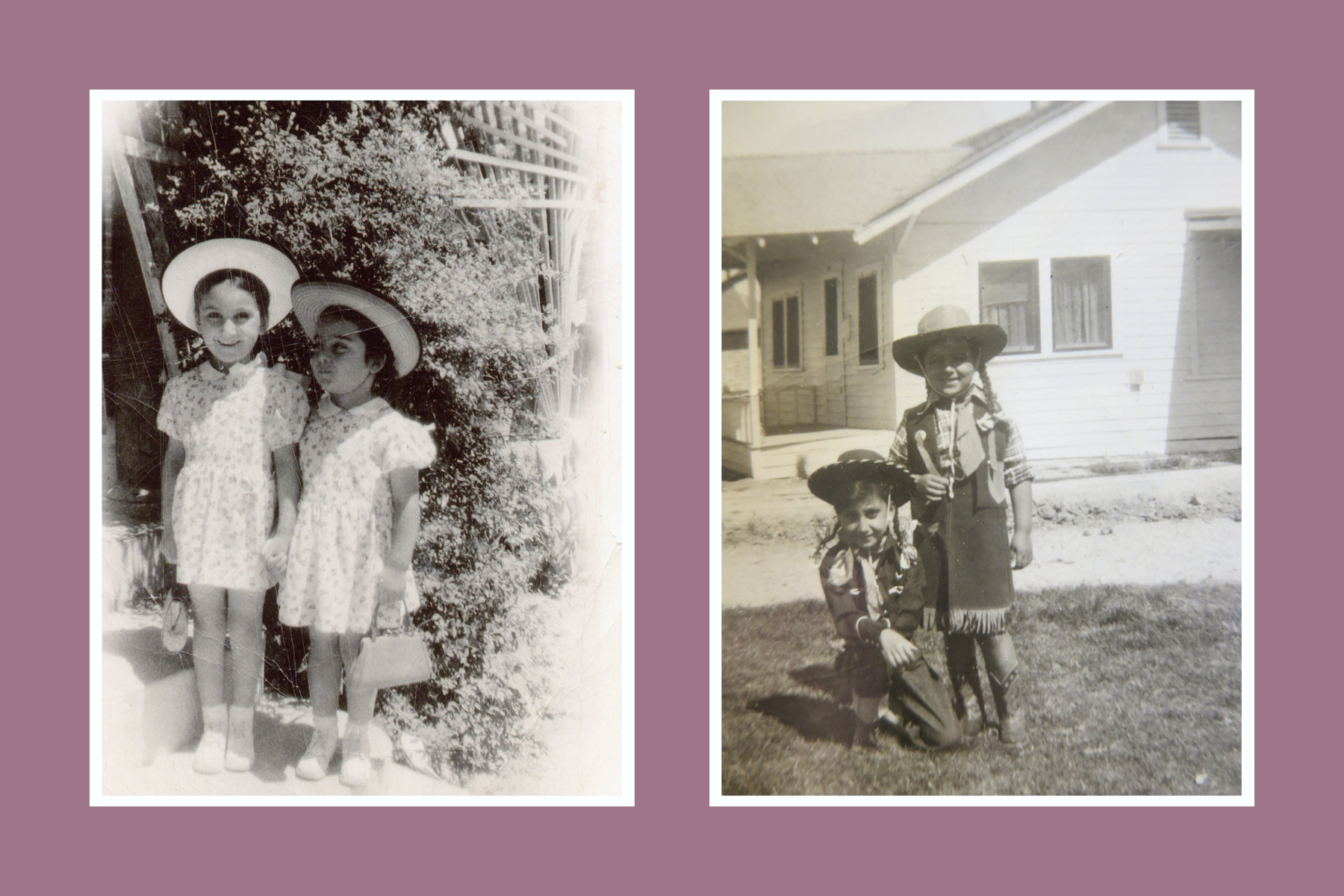
Frances and Edith, from Tucson to Calexico.

Tony married Sara Higuera when Edith was 4 years old. The girls went to live with them in Calexico, CA. She inherited two brothers from Sara and six more brothers came after that. Edith loved being around her big family in Calexico and Mexicali. She enjoyed being a cowgirl. She had a huge crush on Roy Rogers and learned to shoot a .22 rifle. She became more cautious after pulling the trigger in the house and shooting a hole in the floor.

Her dad had a restaurant in Calexico called Tony’s Round-Up. Deciding to expand, he opened up a second restaurant in another border town a few years later. And the whole family got to move! The family spent time in Tecate and Campo. Wanting a change in her life, she moved to Tucson to spend time with her mom Nela and family; which included her beloved Mama Chu, Vega, and sisters. Tucson High proved to be too large for her after small town living, so when Tony’s family moved to Port Hueneme, she joined them. She was part of the first graduating class of Port Hueneme High School.

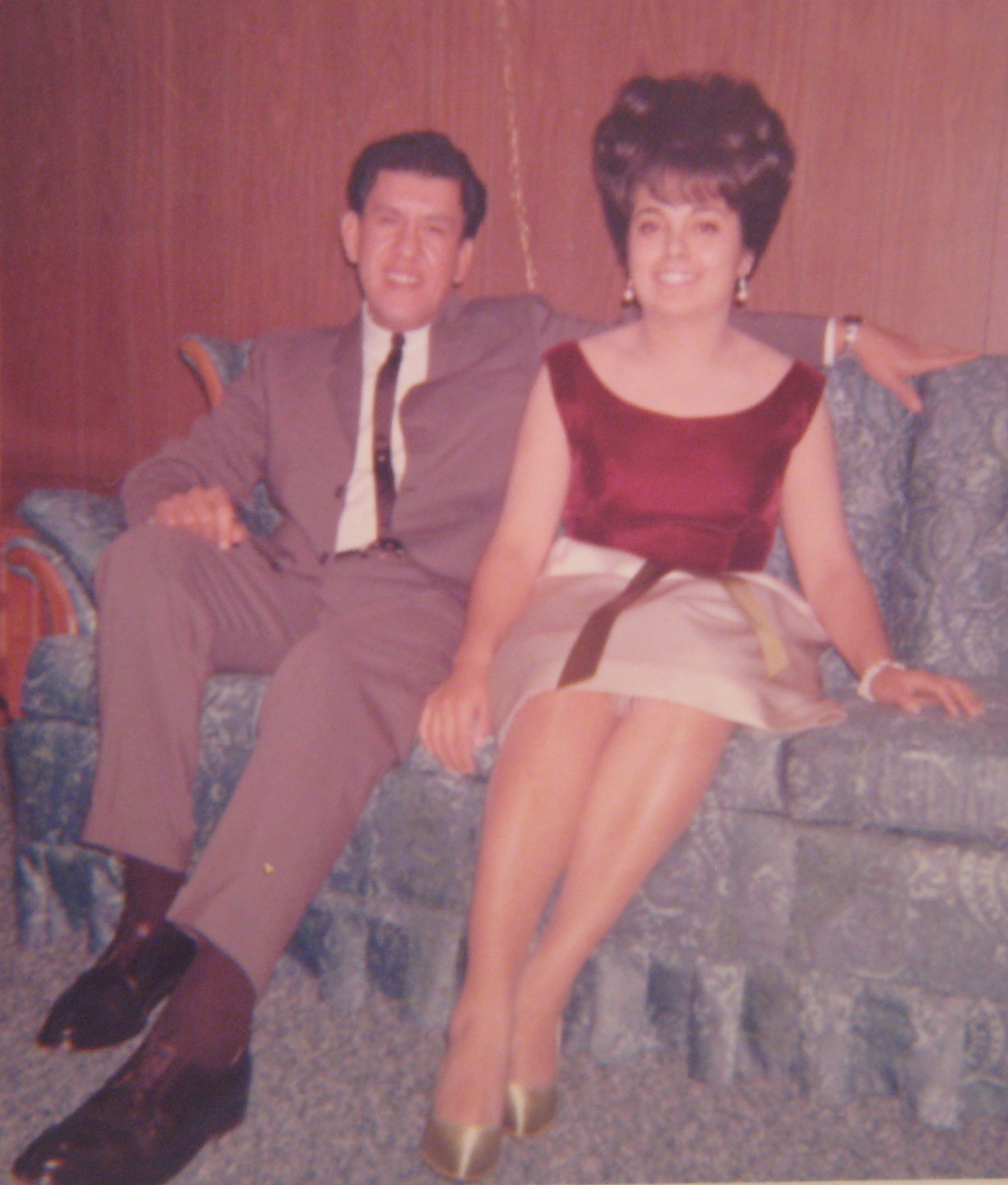
Edith went to live with Frances’ growing family back in Tucson. Eventually, she followed them to San Jose, CA. She worked as a nanny and in a cannery. At a party, she met her future husband Edward Baltierra.

Going out.
Formal date to San Francisco.
Cutting the cake on the special day.

They married on September 4, 1965. Ed worked for Ford Motor Company and Edith was a Homemaker. Three years later their daughter Edwina was born.

Edith loved swimming.
First birthday party.

She was a very supportive mom. Edith learned how to drive when Edwina was in grade school to get her to different schools. She wore several hats over the years. She was a volunteer mom in Edwina’s kindergarten class which led to her being a Teacher’s Aide at Meyer Elementary. There she met life long friends – Mrs. Padilla and Mrs. Soares. Later, she became a Front Office employee for a dentist. There she met her beloved friend Kitty.

After Edwina graduated from high school, the family moved to Paso Robles, CA. They lived on 2 acres. Edith got chickens and enjoyed “country life.” She went to work for Kmart where she met some of her dearest friends Verna, Terri, and Hertha. She loved being a great-aunt to her sister’s grandchildren too.

Edwina married her husband Ted and they moved to Oklahoma. In 2001, Edith and Ed moved to Tucson, Arizona. She was able to spend time with her Aunt Lola and was caregiver to Lola toward the end of her days.

In 2004, Edith had a grandson! Well, Edwina had the baby, but a whole new chapter for Edith as a “Grammy” was born. His name is Matthew, but she always called him “Mijito” or “My Grandson.” She was one of Matthew’s biggest cheerleaders, even when he was being a stinker.

Grammy was wrapped around his finger.

In 2017, Edith and Ed moved to Stillwater to be closer to the family. She worked for the Election Board enjoying seeing people exercising their civic duty every election cycle. Edith loved to garden. She would plant seeds, perennials, add to her collection of pots to grow more things in, or rearrange bricks and cinder blocks to get her yard the way she wanted it. She loved to send and receive letters. She kept all the cards that were sent to her! All. Of. Them. She still wanted to learn to yodel and whittle. Her favorite saying was “It’s a beautiful day.”

Edith had been very supportive of Edwina’s genealogy research. She patiently listed to her daughter when a new discovery was made. They went on trips to visit cemeteries or interview cousins in Calexico. Thanks to this hobby, she did see the face of her namesake Edith Edwards Escalante, her dad’s first wife, in a photo. While she was not a fan of her first name Elia, she did learn that it came from a long line of Elias loved by family starting in 1915. Edith’s one regret was never seeing a picture of her Grandmother Rufina, for which there is still a $100 reward. This blog site has everything to do with her love of her family.

Family photo – Tucson, 2015.
Edith and Frances.
So much to remember.

Edith passed with her sister and her daughter by her side.

Edith was preceded in death by her father Albert Escalante, her mother, Nela Ysmael Gonzales, her husband Edward Baltierra, and her brother Jimmey Escalante-Encinas. She is survived by her daughter, Edwina, her son-in-love, Ted, her grandson, Matthew; her beloved sister, Frances, all her brothers – but especially the wonderful brothers who were her friends – Alex, Arthur, and Butch, her sister, Christina Benitez; and Ted’s mother, Betty Kersten. She also leaves behind friends, her godson Randy, and many beloved nieces and nephews. We cannot possibly share all of the photos of her friends/family here. Ted called the shelves in the living room her “living ofrenda,” as all those she loved were there for her to look at, to remember every day. Thanks to all of those who visited, sent flowers and cards, or called.

Edith did not want a funeral. Her ashes will be spread with her husband Ed’s.

February 16, 2024 – her birthday movie date with me.

Edith had been having some severe back issues during the last six months of her life. On February 25, 2024, she went to the ER. She learned that she had metastasized colon cancer, the same disease that took her mother. Edith was given “up to 6 months” to live. She passed in just over one month of the diagnosis. She asked that we encourage everyone to be their own health advocate. Edith had gone every 6 months to her regular physician. She even asked for advice from her back doctor and pulmonologist about the pain she was feeling. Every one of them missed this diagnosis. If something doesn’t feel right, or your doctor isn’t listening to your concerns, find another. Discuss conditions for which you have familial predispositions. Find someone who will advocate for you. When you are an older patient, make your voice heard.

Picture it – Northern Sonora, 1775…

During the last few months, I’ve been listening to Borderlandia’s podcast series. Alex La Pierre interviewed the late Dr. Jack S. Williams. Jack was an expert in Spanish Colonial history. He had some wonderful stories. As someone who tries to understand the times our family lived in, this information has been illuminating.

Dr. Williams off-handedly mentioned author Kieran McCarty. I happened to have one of his books in my backpack as my 4th great-grandfather Narbona was mentioned in it. But apparently, there was another book, “Desert Documentary,” that my library didn’t have. I did a quick Interlibrary loan, and voilà, it was in my hot little hands.

Guess what? I found family history in this book as well.

Today’s blog post does something unique. It is going to highlight a female family member. As much as men like to think they create society, there is no population without the women. 8-12 babies aren’t going to birth themselves. In the middle of a desert. But, I digress.

So picture it. Northern Sonora. The VERY Simple Version:

The Locations of Where Our Story Takes Place.

Spanish settlers and peaceful Natives were having issues with Apache aggressions. The Tubac Presidio was supposed to be guarding the San Xavier del Bac mission, but the distance and limited number of soldiers made that difficult. After letters were written and inspections were done, Irish-born-but-Spanish-officer Hugo Oconor declared that Tucson needed its own presidio. August 20, 1775 became the official anniversary of Tucson.

Hugo Oconor doing Spain’s work on the frontier.

Work on the new presidio began. The work was very slow going. That needed to change.

Enter Brigadier Pedro Allande y Saabedra. He was a career military man. He was born in, and devoted to, Spain. He came to the Spanish-Americas in service of his King. He was married to Maria Josepha Tapia. He was part of the Mexican Dragoons (mounted infantry). Pedro was sent to the northern most outpost in the Sonoran territory in 1768. He was made captain of the Tucson presidio on February 19, 1777.

Being a very regimented man, he was appalled at the lack of discipline at the presidio. He worked to get the outpost in order. His methods were rough. Pedro was reprimanded for his “cruel and improper punishment to maintain discipline, and for employing solider and Indian scouts in this private business affairs.”

Ever the disciplined military officer, his troops were some of the most well-trained in the region. Just because they were in the middle of nowhere didn’t mean they were to be a shoddy group. They were known for their shooting abilities. “The commandants harshness got results;” which is why he and his forces were able to stave off an Apache attack of 600 on May 1, 1782. He fought valiantly to keep it safe, getting a severe leg wound that would cause him nerve pain long after. The fighting continued throughout the years.

Tucson remembers Pedro.

Pedro and Josefa had many children together. Most notably, at the time, his “only son” Pedro Maria Allande, who also served in the military. I don’t know the date Josefa died. One book insinuated she had passed before his arrival to Tucson. In a letter below, he referred to 7 of his daughters as “orphan girls.” I am guessing that these young ladies came from his first marriage.

According to the University of Arizona records, Pedro remarried a young woman from an established Spanish-Sonoran family. And that family would be ours.

Pedro married Maria Ygnacia Escalante. She was sister to my 4th Great-Grandfather, Captain Leonardo Escalante. She had been born in 1767 and baptized in Arizpe, Sonora. As a teen-wife, she was at least a generation younger than Pedro, but eligible marriages within acceptable castes were hard to find.

From the University of Arizona.

One of the reasons I’m highlighting this couple is because I was able to find a few things out about them beyond the most basic of information, which is rare for something 250 years ago. Ygnacia and Pedro established a life together in this region of New Spain.

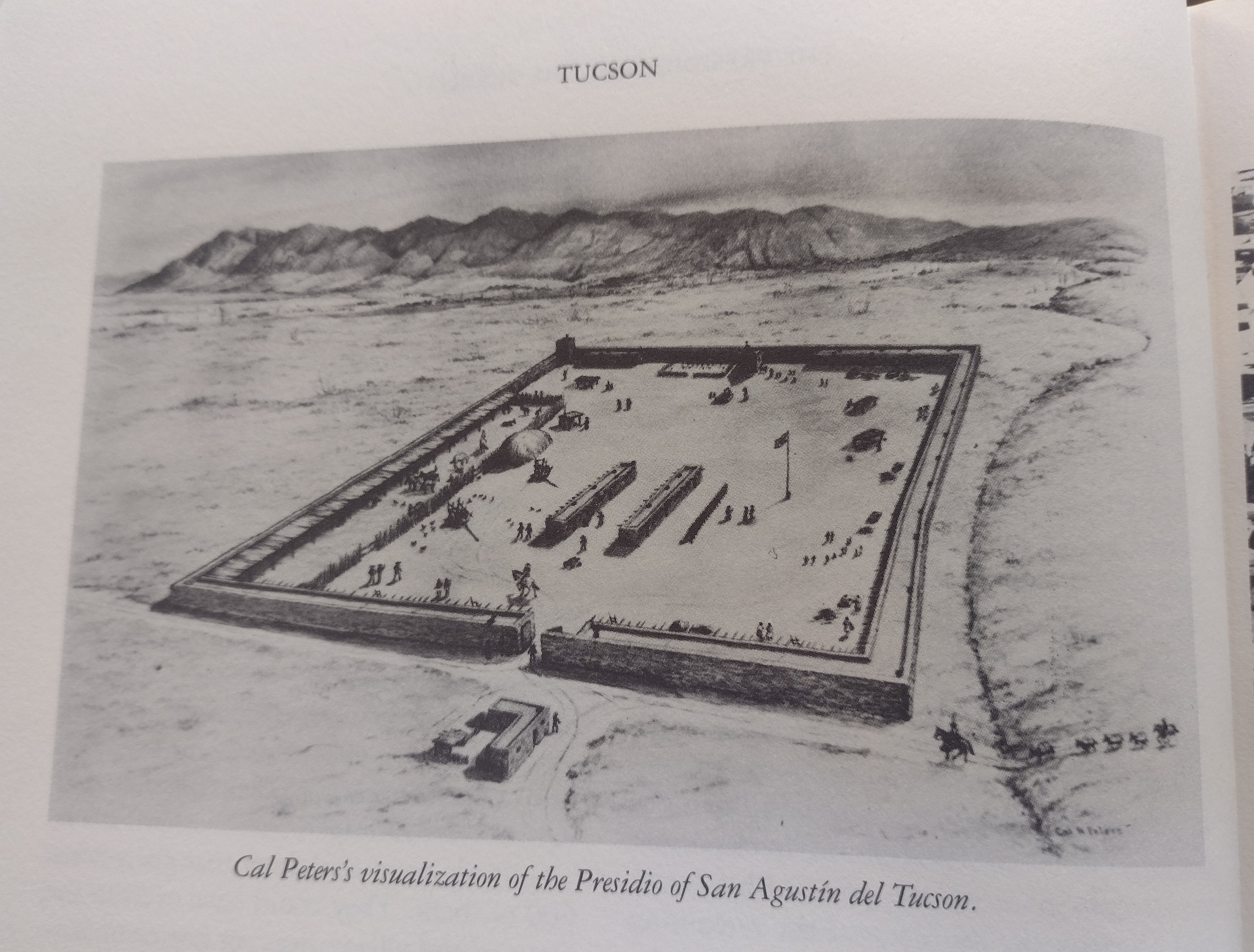
Artist rendition of Presidio – From Sonnichsen’s book.

There is an entire chapter dedicated to Allande’s tenure in Tucson in McCarty’s book. After almost 10 years at this outpost, Allande was ready to retire. His injuries in the many battles he fought against the Apaches were still affecting his physical health. He wrote the King of Spain, desperate for a reassignment. Pedro included his resume of work to illustrate his commitment to his job. Beyond his years on the frontier, he fought the Moors, served in the war against Portugal, and reinforced the Tucson Presidio with no monetary burden to the royal treasury.

Finally, Pedro was pitied and released from duty by Jacobo Ugarte y Loyola, the new commandant general of the northern provinces. The Allande family was sent to Mexico City in 1788 via Horcasitas until he could be reassigned by the King. Ygnacia was very pregnant at the time so their trip necessitated a stop along the way. Pedro’s own words to the Viceroy:

Pedro had a hard time with civilian life. While the family had servants, he didn’t have the military underlings to find him shelter for the group. He wrote that he and Ygnacia had two toddler-aged daughters together already. She was 21 by this time. This was literal family history he wrote! For me!

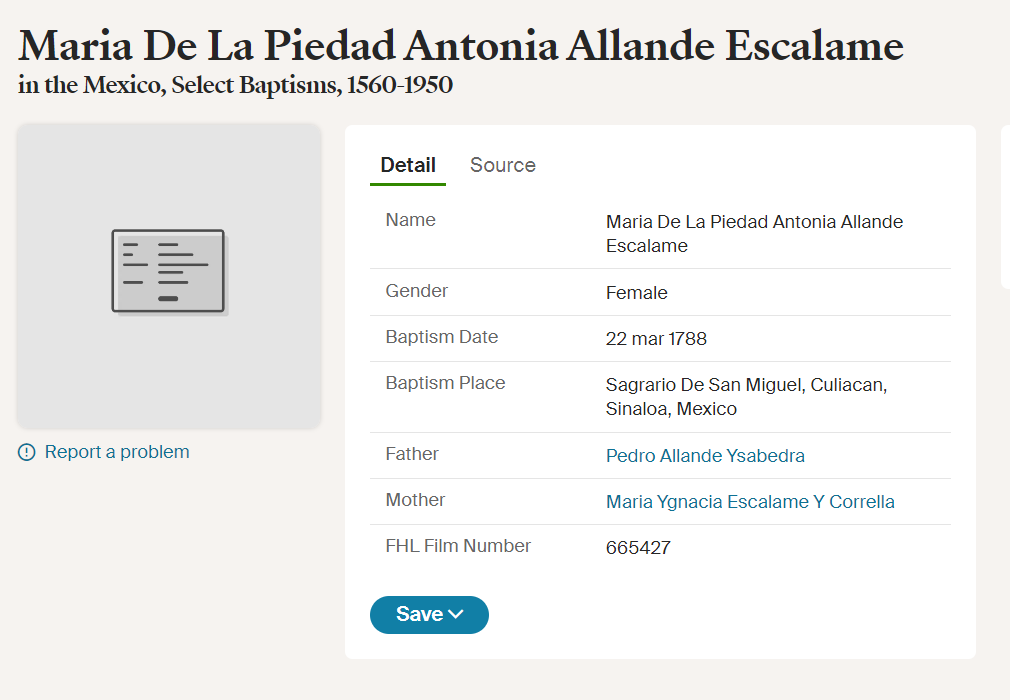
Doing some cross-referencing in Ancestry, I found their daughter. She was baptized in Culiacán where Ygnacia was recovering. Maria was the baby mentioned in the book!

I have known that Ygnacia was married to Pedro for a while now. My research guru Dan King asked me to look into information on a Bishop relation, Father José Antonio Laureano de Zubiría y Escalante. He was the nephew of our Leonardo and Ygnacia. In his paperwork to become a priest, the familial ties needed to be documented. And aren’t we fortunate that they were?! Showing that Ygnacia was married to Allande was a feather in the young man’s cap. The testimonial below documented that these two Escalante’s were siblings to Jose’s mother, Geronima.

This document also shows Leonardo as Captain of the Bacoachi Presidio. But that is another post.

The Allande’s have more children but only one I could find. They had a son in September 1792 while they were living in Mexico City. His name was: Josef Ygnacio Macedonio de la Concepcion Juan Nepomuceno Allande. I’m sharing this because it seems they had put quite a bit of thought into the name, so let’s take the time to appreciate it.

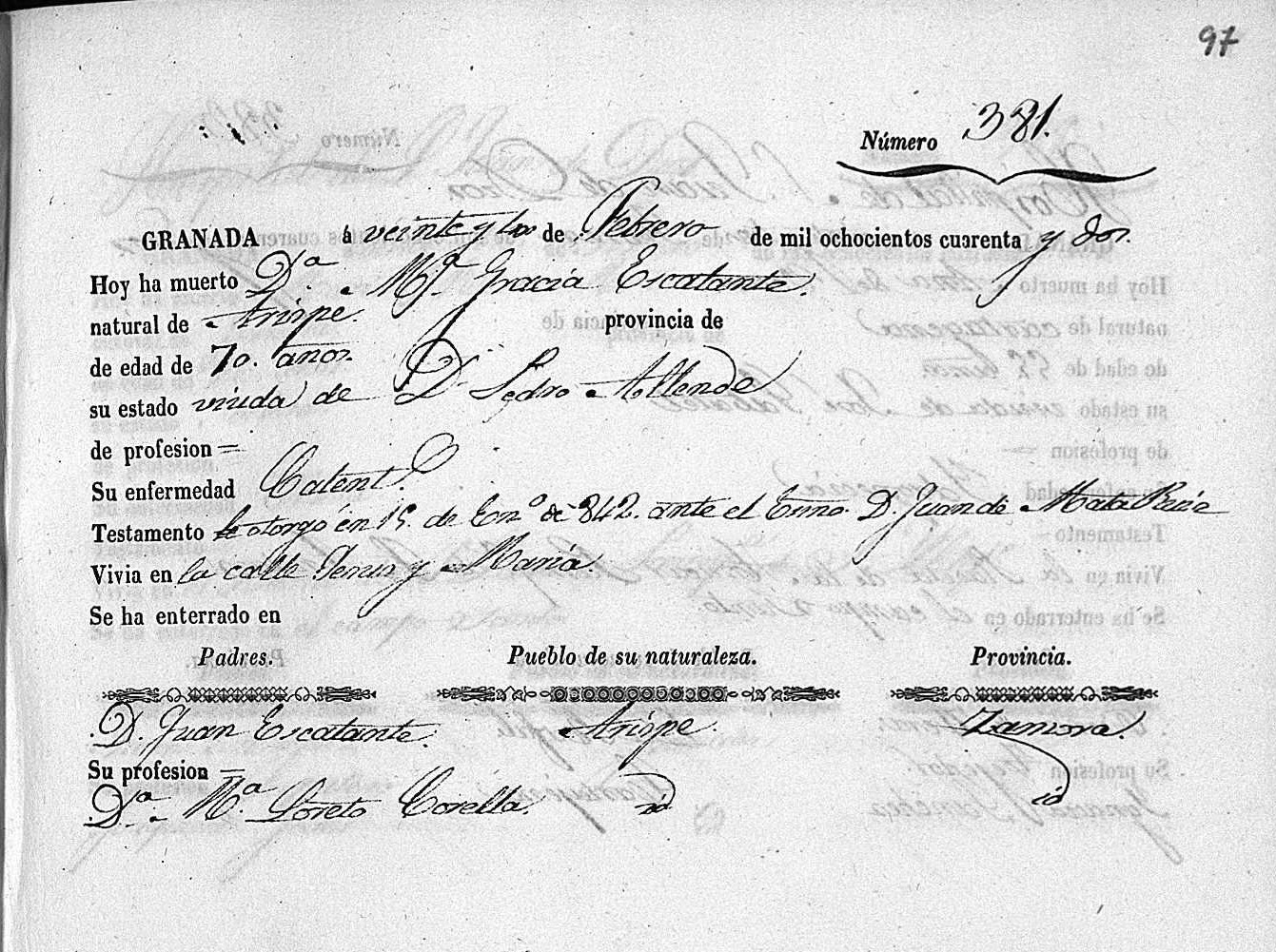
I lost track of the Allande’s after this point. And then I found Ygnacia’s death paperwork. With Pedro’s deep devotion to the mother land, the family went back to Spain. I have to admit that I never thought of any of my relatives born in the colonies would go back to their country of origin.

“Native of Arizpe, Sonora.”

Ygnacia died in 1842, some 5,800 of miles away from her birthplace and birth family. I am hopeful that her life with Pedro was good. He was much older than she was. How long was she widowed without him? Think of all that she saw. From the sparsely populated desert Northwest of Colonial Spain with its wars with Native Americans, to Granada with all of its grand architecture and Mediterranean culture. Was she looked down upon as a “country girl,” kind of backwards? Or was she able to fit in back in Spain?

Maria Ygnacia Escalante was found. From an anonymous mention in a history book, to a wife, mother, and world traveler with a name of her own. We see you, Tia Ygnacia. We see you.

References:

I know I should do official footnotes, but I don’t want to. Haha!

Tucson, the Life and Times of an American City. C.L. Sonnichen. 1982.

Desert Documentary: The Spanish Years, 1767-1821. Keiran McCarty, 1976.

Borderlandia Podcast: https://www.youtube.com/playlist?list=PLFZUxAsw7utPwsWzHs2nZ5cCx2Q2ArVGe

Photo of the Landmark from the Historical Marker Data Base.

Special Thanks:

In September I was able to visit Arizpe, Sonora. It was the most amazing experience that my little genealogical heart could have. I was able to be in the place where Escalantes lived. I went to the cathedral that Ygnacia was baptized in 256 years ago. Thanks to my fellow Borderlandia travelers who gave me some extra time in the Arizpe cemetery.

Thanks to Alex La Pierre and the late Dr. Williams for helping me find Ygnacia’s story.

All is Not Gold That Glitters

Greetings all! How does fall find you this year? Fall was quick as a wink here. We have had two nights below freezing already. Welcome to Winter.

This next chapter of my blog post comes with bigger discoveries, and a few shocks to the system. But it wouldn’t be true Escalante history without the drama.

When I search for new family, I try to verify facts that concur/line up with others I already have. Oral histories have also proven quite effective, but double-checking it in writing is better as the people who lived events had “reported” them as they went going along.

My grandfather Tony’s dad was Leonardo Escalante. On Leonardo’s birth registration, his father’s name is listed as Leonardo Escalante Narbona. Spanish tradition is that a person’s given name is First Name, Father’s Surname, Mother’s Surname. Normally, this tells me his mom was a Narbona. It looks as if with this naming, there was an intent to make sure the name of Narbona was passed along to his son. (Technically, he should have been Leonardo Escalante Bustamante.)

I am grateful for the bread crumb trail left behind, as this lead helped to narrow down his brother who was Ramon Escalante Narbona. Great!

In Ramon’s wedding registration, I found their mom was Maria Narbona. Wooh hooh! Now we are cookin’. <-This is how we talk here in Oklahoma. haha!

Then a good fairy, in the guise of Mr. King, was good enough to leave bread crumbs behind for me. He is concurrently building our tree in a parallel universe at Ancestry; even though we aren’t related, because he is kind and found the tneranch.com site once! Isn’t that great?

He came upon a wonderful document that discusses one Leonardo Escalante marrying Maria Narcisa Narbona, in Chihuahua in 1824! How cool beans!?!

Special marriage dispensation of Leonardo Escalante and Maria Narcisa Narbona, 1824.

This document stated that Colonel Antonio Narbona and his wife Maria Ysabel Escalante gave permission for their daughter Maria Narcisa to marry her “Tio Carnal” (uncle by blood) Leonardo Escalante.

Yes. Her uncle.

Leonardo and Maria Ysabel Escalante were siblings. There is reason to believe they were half-siblings, but they were “hermanos” none the less. Our propensity for marrying within the family was almost habitual. If officials were constantly drawing trees lines of consanguinity in marriage registrations, you know it’s excessive.

This document was in the Ancestry documents for Arizpe, Sonora. But how exactly would Ancestry categorize this??  It was in a records book for the church. But this was not a church document. This was a government paper signed by a man who was kind of a big deal.

Colonel Antonio Narbona was Maria’s father, my 4th Great-Grandfather. He was also a géfe político. I’m going to attach the Wiki version of his life at the bottom of the page. But I will highlight a few things in this narrative.

2ndmap

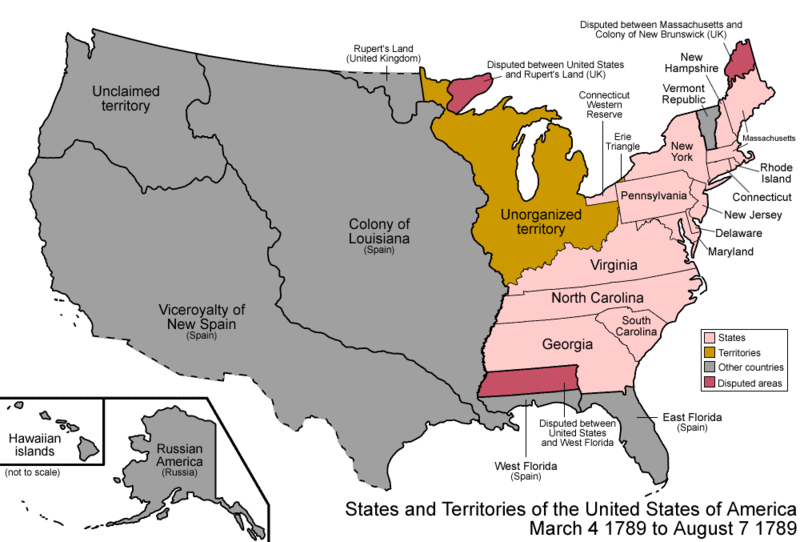
Antonio Narbona was born in Mobile, West Florida, Spanish Territory in 1773 (now present day Mobile, Alabama). We were from Dixie, y’all!!! He was Criollo – which means Spanish blood, born somewhere else. [France will regain Louisiana in about 1801 and sell it to Jefferson in 1803.]

Holy smokes. We have Spanish family in North America before the United States becomes a nation. Antonio joined the military and headed west where he was needed for Spanish expansion.

I always do a Google search for family. You never know what will come up. Narbona was no different.

But then came the hard part.

I found him on Wiki. I saw that the signature they had for him matched the above signature on the dispensation. I then found that his name kept coming up associated with one place in particular. It was a place called the Canyon de Chelly, near Chinle, AZ. His name was also attached to the following pictograph.

Spanish expedition against the Navajo.

The above pictograph was drawn by Navajo artists. It was to represent the Spanish army, that killed an estimated 115 Navajos in the winter of 1805. The army was led by then Lieutenant Antonio Narbona. The pictograph was created after the fight.

Narbona’s military star was on the rise. He became commander of the Tucson Presidio. He became the Governor of New Mexico from 1825-1827. Many of his children married in Arizpe, Sonora.  He was an active participant in Mexico’s independence from Spain. He died in Arizpe in 1830 at the age of 56.

In further research, I found a great book I’m going to need to purchase. “Cochise: Chiricahua Apache Chief” by Edwin R. Sweeney. It discusses the death of Antonio Narbona, Junior (our Maria’s brother).  Spanish, and then Mexican, settlements and their fights with Native Americans went on for decades. Narbona Junior was still fighting Apaches in 1848 where they killed him on the front porch of his home.

fronteras

Narbona Jr. lived in Cuquiarachi, SW of Fronteras.

Once Narbona Junior was slain by the Apaches, the Mexican settlers left the village a virtual ghost town.

Our history turns away from the Narbona family, as we become the Escalante family. Maria had three children I can find. I have written about our Leonardo and his brother Ramon. There was also a daughter who died at 15 named Maria Guadalupe.

*****

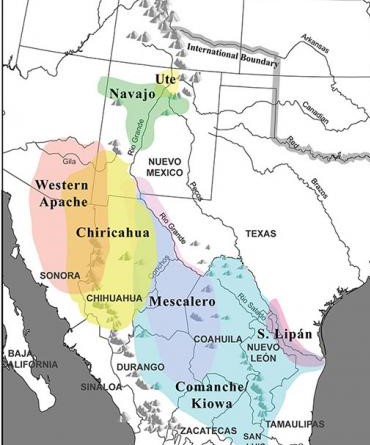
Narbona Family Karma Factoid: There is another famous Narbona in the story. However, Miguel Narbona was not blood related to the family. Miguel was an indigenous child captured at about 8 by Mexican troops. Colonel A. Narbona, Sr. kept him in his home, probably as a servant. Miguel took Narbona’s last name, “after becoming educated and Christianized.” He ran away back to his people at about age 18. He led attacks with the Apache leader Cochise for years. He was considered the “war leader” of the Chokonens, as he really didn’t want to make peace with Mexico as other leaders did. He was still embittered by the treatment of himself as a child, and the way the colonizing Mexican government kept doing his people wrong.

BRLASFall2010-SMALL-MapofBorderCultures-DeLay--750

While tribes were separate, they banded together to fight against the Mexican government.

*****

I found this next bit of information interesting and since this is my blog-site I am indulging myself by writing it up. Current events involving the United States/Mexico border and  “undocumented” immigration issues have been weighing upon me heavily the last few years. Upon reading Ms. Dunbar-Ortiz’s book, I feel it should be shared. 

When Colonel Narbona was governor of New Mexico, he noticed a large number of Anglo-Americans settling into Santa Fe and Taos. In a letter to his government in 1826, Narbona wrote regarding his concern over the “growing foreign population”:

“The individuals in this report remain in the Territory as transients without demonstrating, up to now, an intention of settling themselves. …By it (Taos) being the edge of our populated area, it affords a refuge which many take advantage of without giving knowledge of their presence.”*

It appears that illegal immigration is in the eyes of the beholder. There was a day when Americans were illegally immigrating into Mexico.

*****

So here is a picture of what the top of the tree looks like these days.

newestnarbonatree

Most updated Escalante tree – Oct. 2019.


*****

Now, I’ve known these facts for a while. I’ve been “mentally processing” through what I learned. I can see there was a very big propensity for family to stay within known Spanish families as much as possible. I realize that I could not be the genetic cocktail that made “me” had half of my gene pool not wandered over to North America. I also realize that so much damage was done to the indigenous people of this side of the world through colonization, war, and frankly, just their showing up on the shore. The conflict is great.

It has taken me months to write this piece. It is family history, but it is rather dark. My present day family is very multi-cultural, diverse. It’s lovely. I think of those who marry into their own social-class or ethnicity as “other folks.” Well, not any more. I am saddened by what I have discovered. I am sorry for past family actions and wish the process/outcome could have been much different. My intent is to educate us. It is our history, but it does not have to be our legacy.

*****

Super Side Note: I asked for Tio Jose Maria Escalante’s grave to be documented at findagrave.com. A kind volunteer went to find him. BUT. The poor sweet man does not have a grave stone. He is buried in their “Potter’s Field” area. What are your thoughts about donating to get him a small grave marker? Think about it and let me know. [Tio Jose was eldest Escalante child and brother to Ruben, Tony, and Fernando.]

*****

So many references out there on this piece. This is just the Cliff Note’s version of everything. For more information, do some internet searching yourself. Or look up the following references.

“Roots of Resistance: A History of Land Tenure in New Mexico,” By Roxanne Dunbar-Ortiz. Quote from Page 75

“Cochise: Chiricahua Apache Chief” by Edwin R. Sweeney

https://en.wikipedia.org/wiki/Antonio_Narbona

http://www.library.arizona.edu/exhibits/swetc/spct/body.1_div.14.html

https://books.google.com/books?id=MU-K3qxXSD4C&pg=PA61&lpg=PA61&dq=miguel+narbona+apache&source=bl&ots=oNqjUEP_Ag&sig=ACfU3U3nNCL278vZrAe8DQasgctlCa3NqQ&hl=en&sa=X&ved=2ahUKEwiVp4WSnMLlAhUGKqwKHTuwCV4Q6AEwFnoECAcQAQ#v=onepage&q=miguel%20narbona%20apache&f=false


The Escalante’s of Southern Arizona – Part II

As I wrote in the “The Escalante’s of Southern Arizona – Part I,” it all started with the brother of our very own Leonardo Escalante y Narbona. Ramon married and had several children. They were first cousins to my Great-Grandfather, Leonardo.

A fellow searcher of family lore found my blog site. He has a great tree on Ancestry. In it, I found a clue relevant to this particular post. He found the marriage registration of Ramon Escalante and Jesus Saldamando. (I only had a jotted down note on scratch paper in the last piece – I wasn’t crazy.)  Thank you, Dan!

ramonymariajesussaldamando

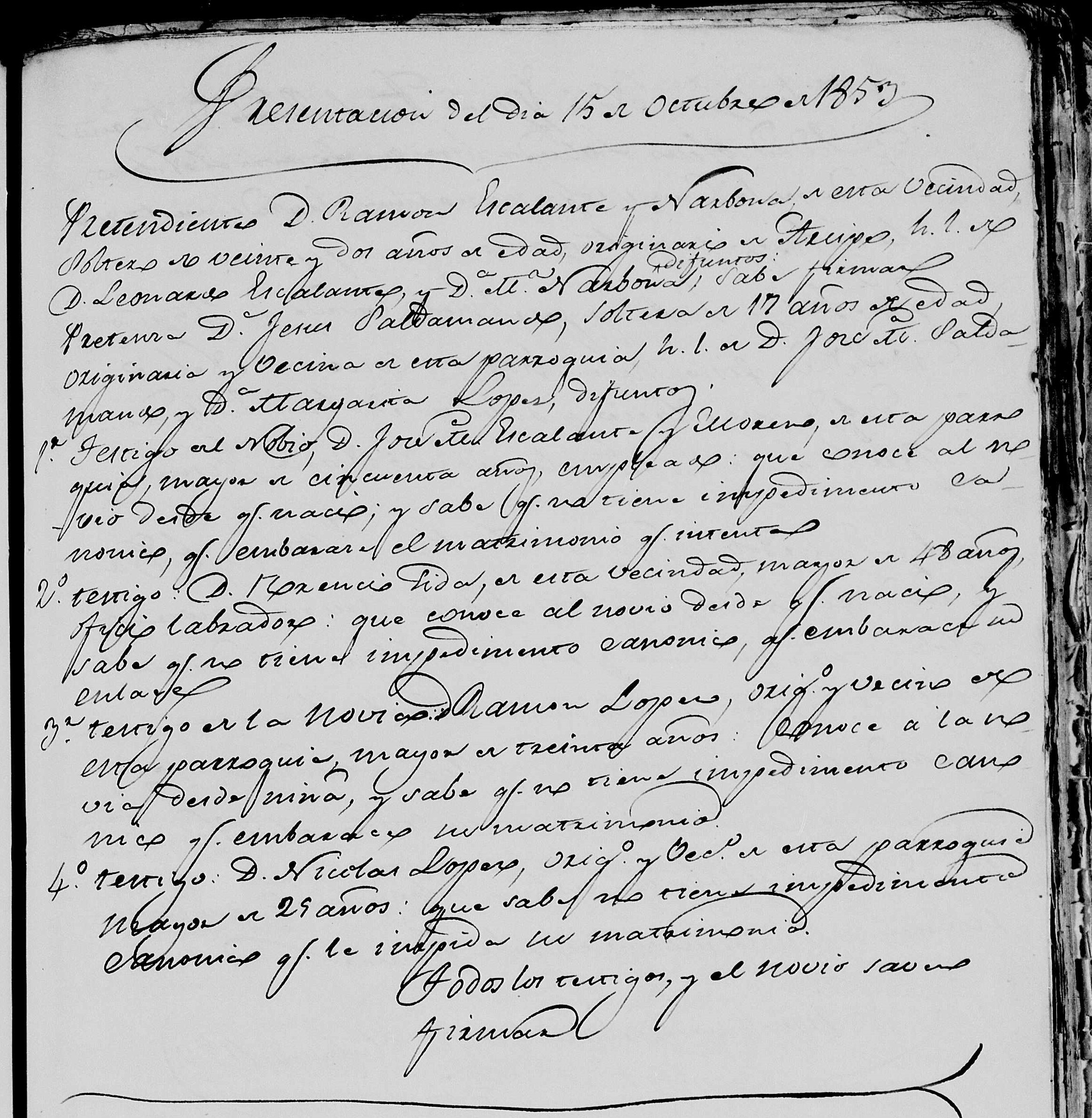
Marriage record for Ramon Escalante and Jesus Saldamando, Oct 15, 1853.

This plucky young couple were married on October 15, 1853, in Arizpe. What I love about the above document is that it gives Jesus’ parents names: Jose Maria and Margarita. Jesus would name her first daughter after her mom. Awww.

I’ve already discussed this couple’s other children. This blog post is about their son, Alejandro Saldamando Escalante.

Alejandro was born in Aconochi, Sonora, in September, 1857.

bana-route-map

The Sonoran Highway 89 on the above map seems to follow where many of the family originated. Notice that this road also led to Tombstone. The family ended up there by the early 1880s. Alejandro met his bride, Petra Valenzuela.

margaritablackburn

Announcement in the newspaper “El Fronteziro,” Aug. 3, 1883. Siblings Margarita and Alejandro were married – two weddings, one announcement.

I can’t be sure how close Alejandro was to his sister once their lives with their spouses started. Alejandro and Petra started their family north of Tombstone, in the St. David area. Unfortunately, there was much heartache in their home. In the 1900 Census, Petra reported to have given birth to 5 children. Only one was still living.

Maria del Refugio Escalante was that child. She went by two names – Refugio and “Hattie.” Their family lived southeast of Benson in St. David. (Remember, the OK Corral happened only 5 years before she was born.)  She was born in 1886. Her childhood must have been interesting. The gunfight at the OK Corral had happened in 1881, but the area was still the “wild west.”

Some of what I have pieced together is from research. However, this post would not be possible but for the kindness of Hattie’s great-granddaughter, Nina M. Womack-Rangel.

Hattie must have been quite the catch. Her dad was a land-owner. She was pretty and petite. She caught the eye of one David Gaw Womack. Born in Texas in 1884, he came out to Arizona. On February 3, 1908, the St. David couple got married by a Justice of the Peace in Tombstone.

hattie and david

David and Hattie Womack. Photo courtesy of N. Womack-Rangel.

tombstone_weekly_epitaph_sun__feb_9__1908_hattiedg

Wedding Announcement – Feb. 9, 1908

Their marriage would produce four children. Alexander, Mary Margaret, Beatrice, and Edward. How nice for Alejandro and Petra to have grandbabies around, especially after so much of their own sadness. Hattie and David did not have the best of marriages, however. They drifted apart, but not without cause.

Hattie had been the victim of a horrible assault. Her great-granddaughter informed me that she was hurt by several men in the area.  She was very scarred by the event, which is understandable. David also had a wandering eye for the women. The combination took its toll. Eventually, she and David divorced.

I was concerned about documenting the attack on Hattie. However, her great-granddaughter thought that her story, and especially her survival, should be documented. Hattie was strong and managed to make it through such a trying time in her life. My admiration for her is vast.

Three of the Womack grandchildren were born by the time Petra died in 1921. She and Alejandro had been married for 38 years.

tombstone_weekly_epitaph_sun__sep_4__1921_petrada

Petra Valenzuela de Escalante passes, September, 1921.

Back to Hattie’s children. Her children were Alexander, Mary Margaret, Beatrice, and Edward.

Her eldest, Alexander, was a crazy handsome devil.

alexander

Alexander Roosevelt Womack – Dashing man

He married Juanita (Jane) Manriguez. According to the 1940 US Census, Alex was the head of his home with a wife, two kids, his mom and grandfather living with him. By January 1941, they had three children: Mary Ellen, Alexander, and Rebecca (not in below photo).

womackfamily

Alexander Womack Family – Photo taken in 1939. (Courtesy of N. Womack-Rangel)

Their happiness was not to last long. Alexander worked at the Apache Powder Plant. Remember, mining was a big business in the area. But a dangerous business.


Arizona_Daily_Star_Thu__Sep_18__1941_alexwoamck

September 18, 1941 article regarding Alexander’s untimely death.

This was a devastating blow to his wife and family.

I’m sure Hattie would have liked to have kept Juanita and the grandchildren with her, but a new widow needs care.  It’s been reported that Juanita chose to move back to her own mother’s house in Tombstone with her three children.

Juanita had a good friend, Anita Ramirez Parra who died in 1934. Anita’s widower, Selso Parra, also had a few children. Both needed each other. Juanita chose a new family situation and married Selso. So quickly in fact, that she was on the “outs” with Hattie for a long time.

Hattie’s daughter Mary Margaret moved to Tombstone in 1930. She was a 19 year-old stenographer in an abstract office. She was boarding at the Federico home. Little did she know then, that she would marry one of their sons, Gilberto. Their family moved to Los Angeles. She passed away in 1974.

1930federicocensus

Love moves in. 1930 US Census, Tombstone, AZ

Beatrice was the third of Hattie’s children. She met her husband as her sister did. Alejandro had a border at his place in 1930 too. James Dickson came to live at their home, which was not far from his job at the explosion plant (probably Apache). Guess who got married? I guess if a husband or wife comes to live in your home, that’s pretty fortuitous. They had two children together. They lived in Los Angeles by 1940. However, by 1950 she was remarried to one William Bently. He is her final spouse, with whom she shares a son.

Edward Eugene came last, being born in 1923. He married Polly Saucedo in 1943. They moved to Los Angeles after their 3 children are born in Arizona. They divorced in 1969.

Back at the St. David family ranch, Alejandro and Hattie held everything together. While his documents make Alejandro seem like a simple farmer, Nina believes her family owned almost 1,000 acres in the area. He was newsworthy.  I think the paper was the social media of the day.

tombstone_weekly_epitaph_sun__nov_6__1921_aeintown

November 6, 1921.


I’ve tried to contact the St. David Historical Society with no success. However, I think the wash and street name are clues of the location where the ranch could have been.

mapescalantecrossing

Pretty sure this is where part of the ranch was. The road heads west leading to the Apache Powder Company where Alex died.

Alejandro finally passes away on January 9, 1949, at the ripe old age of 92. His daughter was now living alone in St. David at age 63. But her story was not quite over. A few years later she married a man named Miguel Sanchez. On May 10, 1951, they tied the knot. They found love in their elder years. After her traumatizing assault, I am so glad she had this window of happiness with Miguel. They lived together for 5 years before a blood clot took his life. While he had children with his first wife, the only thing on his tombstone is “Miguel Sanchez – Beloved Husband.”

The end of Hattie’s life was spent with her daughter Beatrice in Oceanside, CA. She lived to be 91. She died Hattie Escalante Sanchez on May 14, 1978 in Los Angeles, CA. Hattie’s great-granddaughter Nina did meet with her great-aunt Beatrice. She saw the rocking chair that belonged to Hattie. Hattie had been so petite, Nina was struck with how tiny the chair had been. She said it looked like a child’s rocker.

Alejandro Escalante was first cousin to my great-grandfather, Leonardo. Alejandro had been fortunate enough to live almost 50 years longer than his cousin. Had Leonardo’s son Jose not been a “wanderer,” going to see his cousin Frank Blackburn in 1918, we might not have had a paper trail of the relationship.

alex's photo

Alejandro Saldamando Escalante – Photo from his travel manifest.

The DNA results were a huge help in confirming the relationship between the two families as cousins. Time, employment opportunities, our nomadic tendencies, 150-ish years, and even death, can move families so far from each other that we forget those places from which we came.

For me, the joy isn’t so much the finding the facts, it is in the reunion.


Guadalupe Escalante – Home At Last

The missing piece.

When you find it, events suddenly made sense. Or there is more confusion. Or sadness. But there is always closure.

My grandfather’s third sister, Guadalupe, had been lost to me (on paper) for years. I had no idea what happened to her after her “incident” with Moran and his kidnapping by my grandfather. The eighth of nine children, I have a feeling Lupe got lost in the shuffle of losing two parents so early in her life, while her older siblings were already “adulting” with their own families.

At the end of August, 2018, much of her mystery ended by my finding one website that gave me a link to archived newspapers. I found digital access to the Calexico Chronicle. And, woah! So. Much. Information!

My normal method to searching for my peeps is to put the names of every family member in the search engine to see what pops up. While it wasn’t a name, I did enter the address of Tia Guadalupe V. de Garcia: 910 East Third Street. It was a home base to many familial events. This one address gave me a huge assortment of information. But even better, it helped piece together important clues… because I never would have entered the name Mrs. Jay Holman.

One article led to the rest of the story.

After Lupe’s issues in 1927, she disappeared. She moved to Monterey and then on to San Francisco. She met a man who had recently relocated from San Diego. His name was Gerald Holman.

They found a bit of happiness and decide to get married.

San_Francisco_Chronicle_1934-01-30_11announmtn

Their marriage was announced in San Diego, Reno, and in the San Francisco Chronicle– Jan. 30, 1934.

How much he really knew about her, I’m not sure. There was a bunch of conflicting information running around the articles. From what I can tell, she called him Jay Holman. It’s not a typical nickname for Gerald, but not impossible.

They married in Reno, Nevada. They lived in a little apartment in the Hotel St. Clair in San Francisco. While I couldn’t find a photo of this particular hotel, I did find a wonderful article with photos of the historical hotels in the area at the time (now the Tenderloin District). It gives a great feel for the area in which the Holman’s’ lived.

https://upfromthedeep.com/uptown-tenderloin/

In August, 1934, the newlywed couple had a fight. Lupe must have had deeply hurt feelings, because she took some drastic measures.

Oakland_Tribune_Wed__Aug_15__1934_

Article from the “Oakland Tribune,” Aug. 15, 1934

Tuesday, August 14, Lupe ingested a toxic substance. She suffered for 5 more days, before passing on my grandfather’s birthday, August 20, 1934.

LEHDCa.jpg

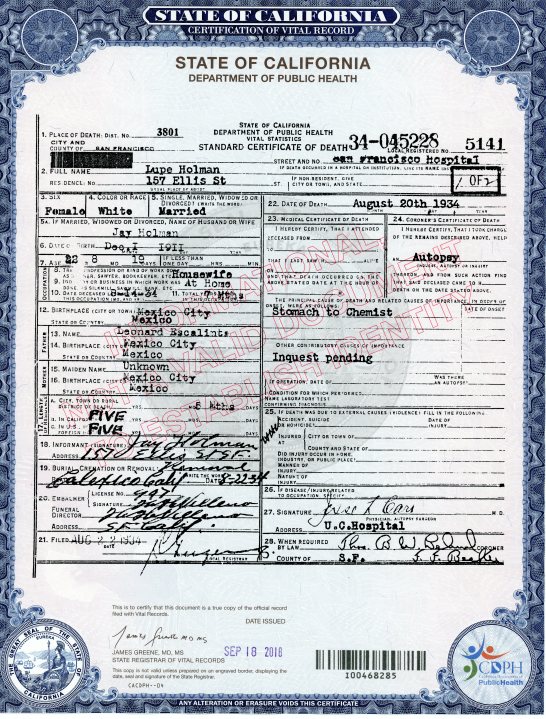
Lupe’s Death Certificate – Page 1

So much of the information here is confused. She wasn’t born in Mexico City, nor her parents, and how much time she lived in the United States was wrong too, as she was born in Ventura County, CA. She very well could have “reinvented” herself for her new life with her husband. Maybe he would have learned more about her if their life together had continued.  The article above stated her husband’s name was Walter. As the addresses match, I chalk this error up to bad reporting. The Death Certificate had a second page which gave the actual cause of death.

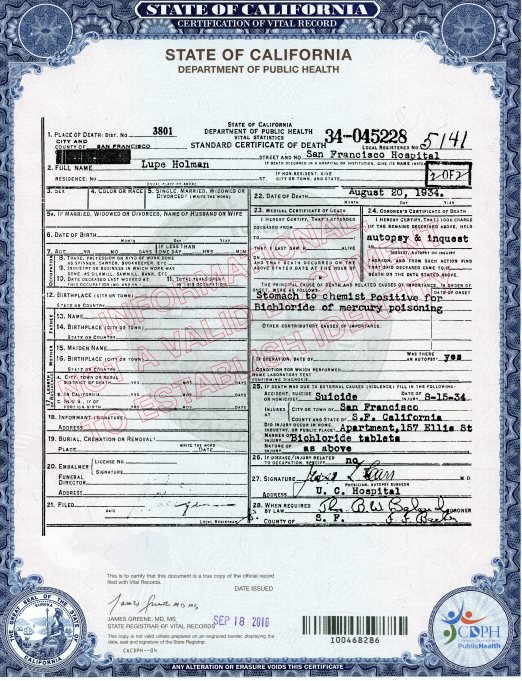
LEHDCb.jpg

Page 2 – Death by Bichloride of Mercury poisoning.

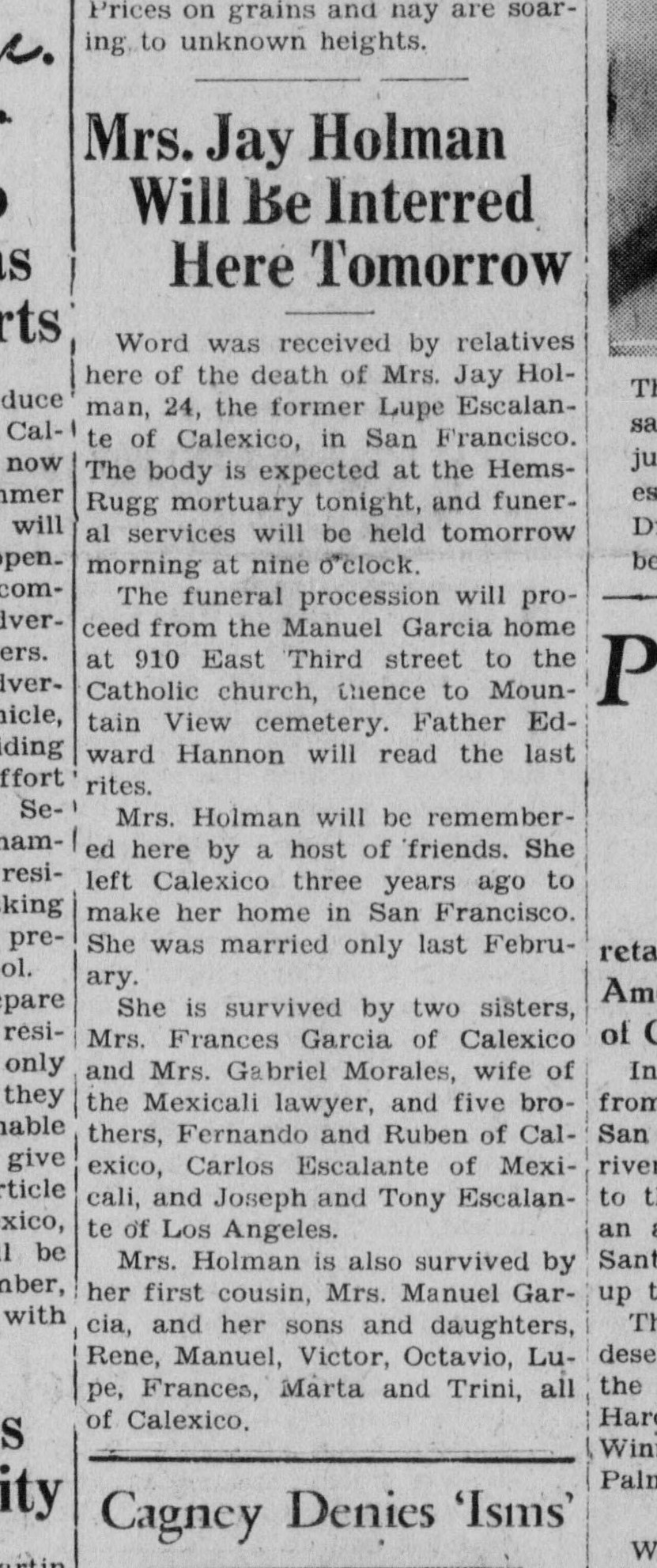
By this time, the family was notified about the sad ending. She was sent home to Calexico.

TiaLupe23Aug1934

Announcement of Lupe Holman’s passing. From the “Calexico Chronicle,” dated August 23, 1934.

Remember that Mrs. Manuel Garcia was Rufina’s sister, and therefore, Lupe’s aunt. And namesake too. The Garcia’s very kindly took the burden of the funeral from Lupe’s siblings. [If anyone can give me contact information to this branch of the Garcia family, I would greatly appreciate it. How can our families have been so close and yet had a breach so deep that we lost touch in the same town? Sigh.]

While Lupe was buried in the Mountain View Cemetery, she was nowhere to be “found” the multiple times I’ve been there. I had been told that Hems Brothers Mortuary has control over the cemetery. I have asked them repeatedly via letter to help me find those family members without headstones. To no avail.

While there is no marker for Lupe, we now know her earthly remains have been in Calexico this whole time. We know she had been in San Francisco. She had been living a life away from her family and her past, but one of lovely independence; a life with love and, for better or worse, one of great passion and emotion.

group

Lupe, Rufina, Tony and Fernando (seated).


The Escalante’s of Southern Arizona – Part I

I haven’t been this excited about my research in quite a while. The seed was planted by a document I found years ago. I am overly cautious when I report. So unless I can find several sources to link  items together, I leave a theory on the side of the desk and move on. Luckily my memory hasn’t failed me yet, so I remembered the document when the time finally came.

Anyway. This would be the document:

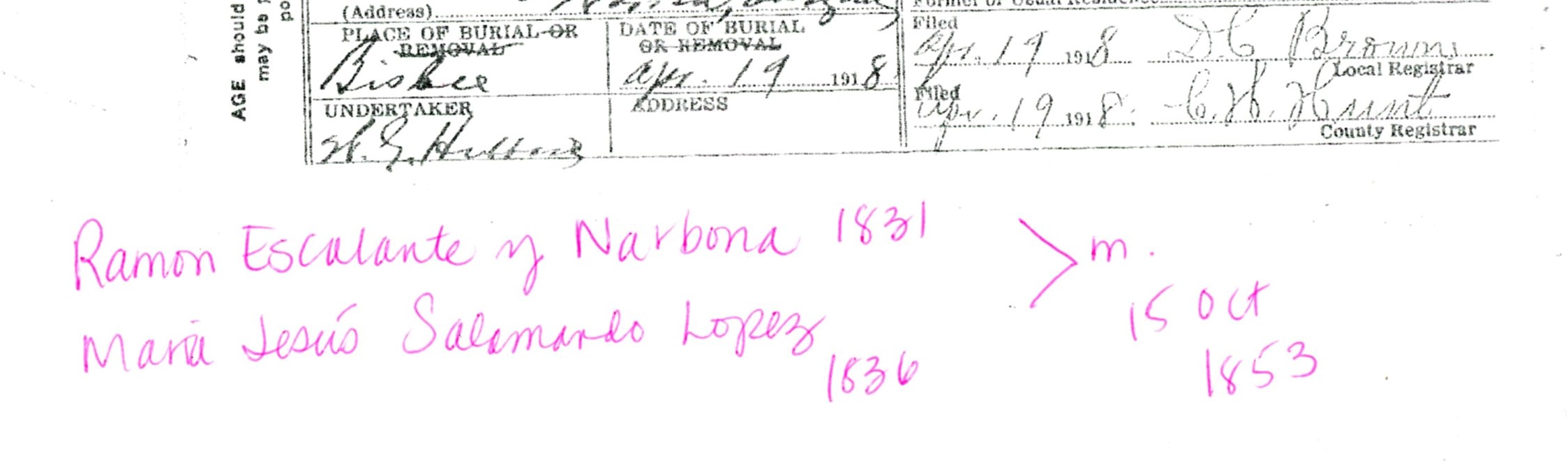
JosetoBisbee

Tio Jose goes to Bisbee –  His manifest, 1918.

Three years after his dad died, Tio Jose Maria Escalante had started his wanderings. He was looking for work. His manifest stated he was going to Bisbee, Arizona, to “join his cousin, Frank Blackburn.”

To be with family.

What?

Now I know Tio Jose had a fondness for Bisbee. His eldest son was born there in 1930. But I didn’t realize he, I mean “we,” had family there.

The name on the manifest matched none of the names I knew.  A few hours wasted searching for Frank’s people told me his mother was one Margarita Escalante de Blackburn. I didn’t know any Margaritas though. (Well, not PEOPLE margaritas.) I wanted to hope, but left it to the side.

A few years later, enter my mom’s DNA results. Many of the names look unfamiliar as the trees that others built had no names that I recognized. Finally a light bulb went off over my head. I figured out that I could sort results by last names. I decided to search Blackburn. And hot dog! Several trees came up. And there was Margarita’s name. We were Bio-Related. Excellent! Research, research, missteps, people who don’t know they are related, and here we go. (Sorry for the slanted chart. I doodle sideways!)

img337

As far back as I have gone. The current Start of our tree.

Our Escalante tree starts at Leonardo Escalante I and Maria Narbona. I can document they had two sons: Our Leonardo II and Ramon.  Ramon and his offspring would become the Escalante’s of Southern Arizona.

Ramon Escalante married Maria Jesus Saldamando. The couple had 5 children I could find. Margarita, Alejandro, Josefa, Sara, and Maria Luisa.

Ramon’s family came up from Northern Sonora closer to the mining towns in the Arizona Territory. The Earp’s and the OK Corral shoot out had already come and gone (1881) by the time the family arrived. By 1883, the two eldest Escalante children married.

Today, I am writing about Margarita Escalante. She met and married a widower, 11 years her senior. Charles W. Blackburn was born in Vermont. He had been a civil war veteran (Union Army). His first wife had died in child-birth, including the child.  He and his surviving son made the long trek to the wild west of Arizona. He met and married Margarita.

margaritablackburn

Announcement in the newspaper “El Fronteziro,” Aug. 3, 1883. Siblings Margarita and Alejandro were married to their respective spouses.


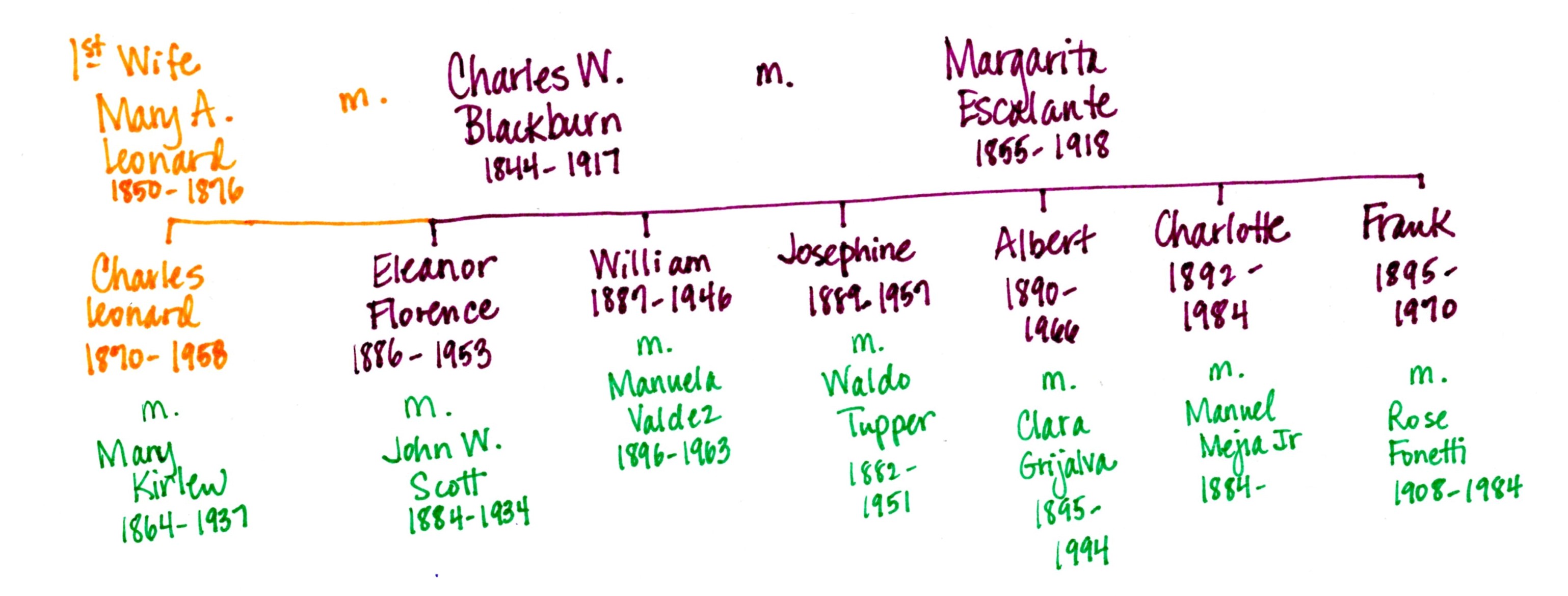
Margarita became step-mother to C.W.’s son, Charles Leonard Blackburn. The couple proceeded to have their own children in good succession: Eleanor, William, Josephine, Albert, Charlotte, and Frank.

img338

Margarita and the Blackburn Tree.

C.W. took to life in this mining territory. He was a saddler. He also got into the undertaking business. He was a Notary Public. He might have been a general store merchant. I found an additional ad that told Cochise County they could buy White Sewing Machines at his place. The newspapers reported C.W. was “Bisbee’s hustling citizen.”

Tombstone_Prospector_Tue__Dec_29__1896_

Being married to a Spanish-speaking woman assisted him becoming a Court Interpreter, earlier in his career. Their son William also pursued this career as well. The family lived in Tombstone for a long time, moving to Bisbee in 1891, and eventually to Warren.

They were a fun-loving family. Besides the below “entertainments” they gave, their family was featured in party news as guests about the town.

Tombstone_Weekly_Epitaph_Sun__Nov_1__1896_

The Blackburn’s were droppin’ the funky beat. “Tombstone Weekly Epitaph, Nov. 1, 1896”

********

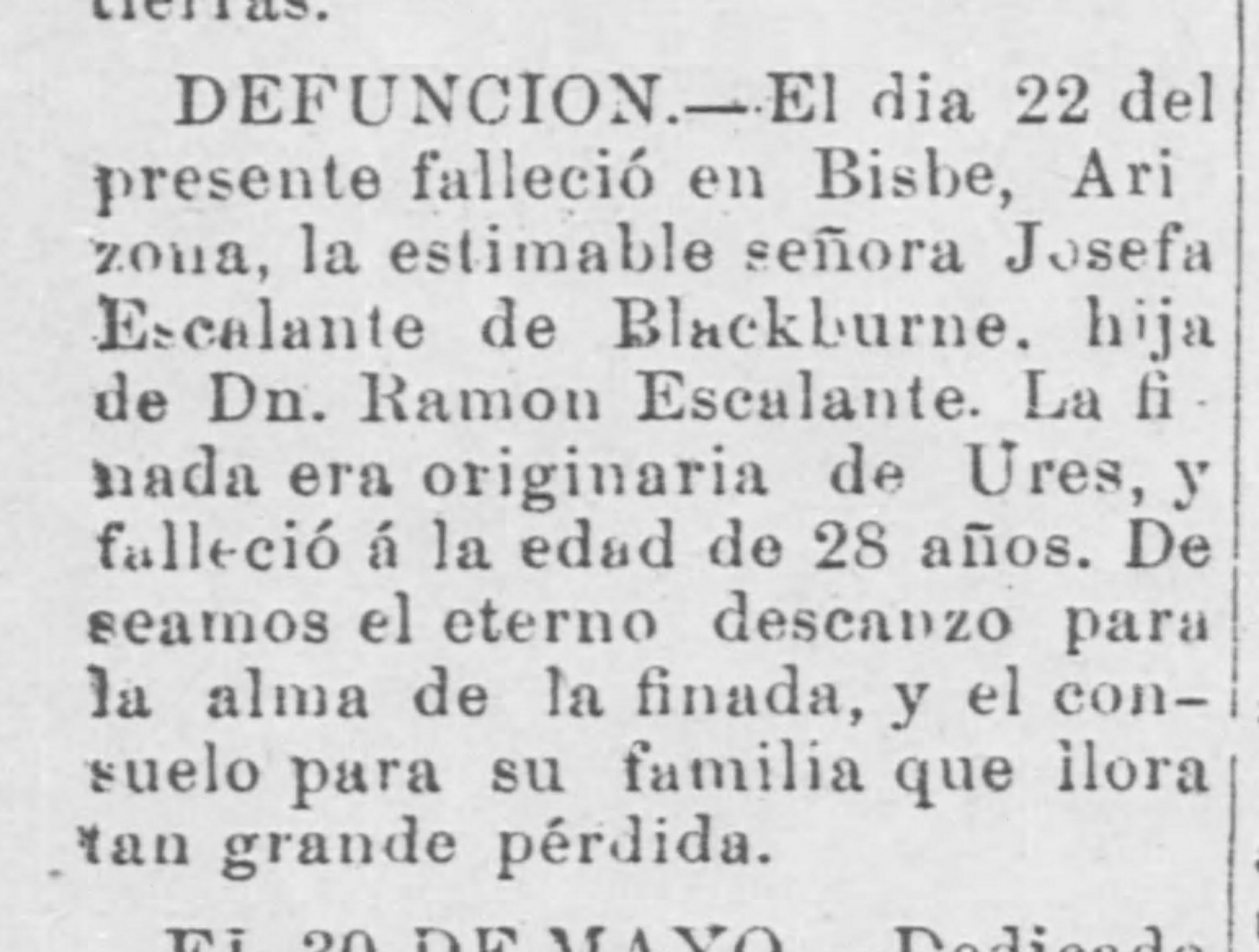
For timeline purposes, I will place the other female Escalante siblings here. Margarita’s sister, Josefa, married C.W.’s brother, William Blackburn. They were only married 3 sweet years before she died of Apoplexy. The below article lets us know she was from Ures, Sonora.

El_Fronterizo_Sat__May_30__1891_

Notice of Josefa’s passing, May 30, 1891.

I could not find Margarita’s mom Jesus Saldamando on paper anywhere after the first wedding announcement. She was not listed in the above obituary either.  She must have passed between 1883 and 1891 because she simply disappeared. I have yet to find much on her at all. I found one lead on Jesus and Ramon’s wedding date years ago when I still wasn’t sure we were related. I took a written note down in quick passing. I’ve been unable to document it since.

RamonandMJS

Valuable notes doodled on their daughter’s Death Certificate.

The last sibling was Maria Luisa. But she died at 2 years old.

MariaLuisa

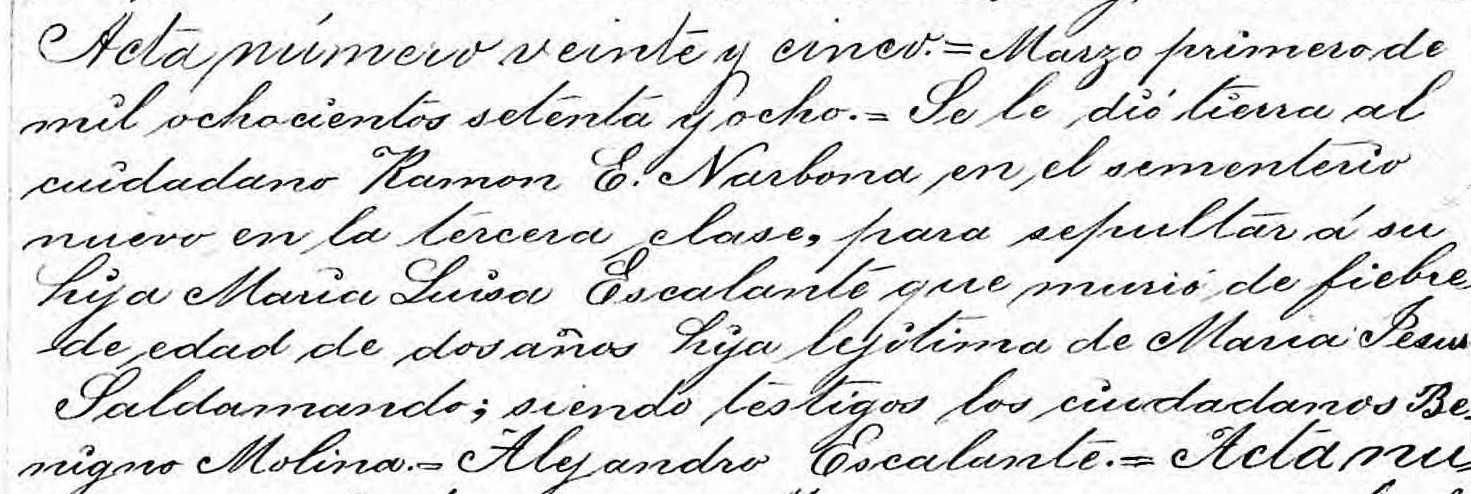
Death registration for Maria Luisa. March 1, 1878. Her brother Alejandro was a witness. She died of fever.

Margarita’s youngest living sister, Sara, lived in the Blackburn home while she was younger. She was living with them in 1900, aged 25. Their father, Ramon, was in Bisbee living as a widower. My “guess” is that because she was a young woman with no mother at home, Margarita took her in for a more stable home life. I think she died early and was buried at the Evergreen Cemetery in Bisbee.

********

Back to the Blackburn Family.

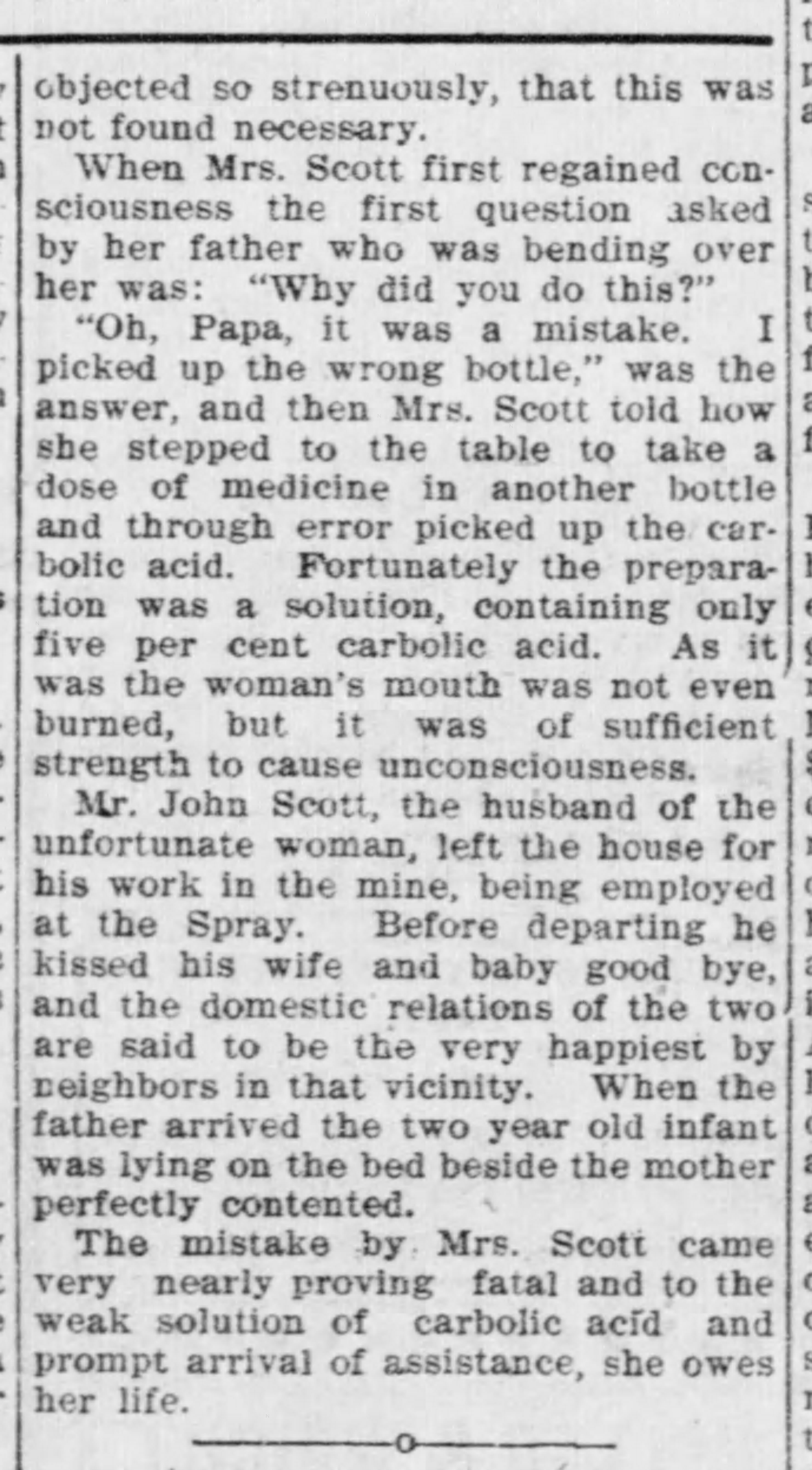
Charles was a mover and shaker.  By 1901, he was a Superintendent for Copper King Mining Company. The eldest of their children started marrying. Eleanor married a Mr. John W. Scott. This little episode must have been THE news about town.

Bisbee_Daily_Review_Tue__Nov_7__1905_A

Eleanor accidentally ingests poison. Nov. 7, 1905.

Bisbee_Daily_Review_Tue__Nov_7__1905_B

Unfolding drama continued.

Charles and Margarita were such involved citizens, their photos are on display in the Tombstone Courthouse State Park in Tombstone, Arizona.  A very kind person helped me in getting pictures of their photos. Thank you, Nina!

MargaretEscalante Blackburn2

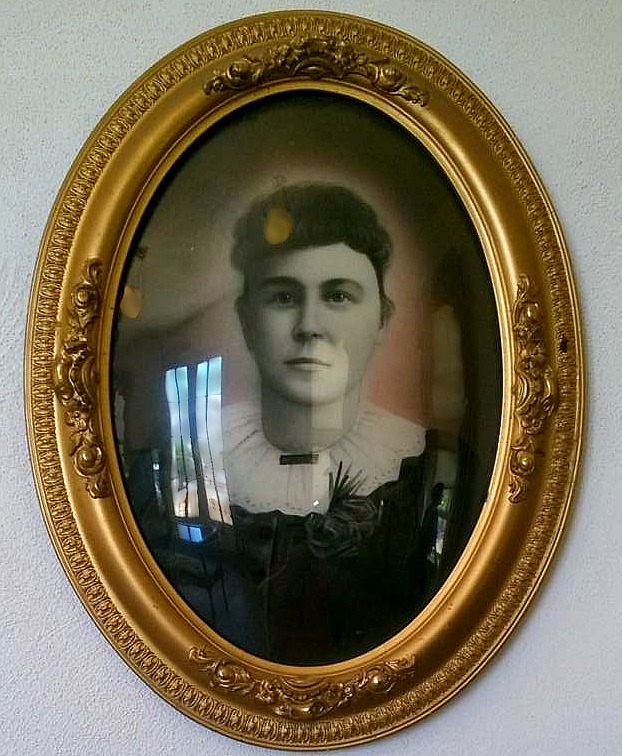
Margarita Escalante de Blackburn. First cousin to my great-grandfather Leonardo Escalante.

CWBlackburnupclose

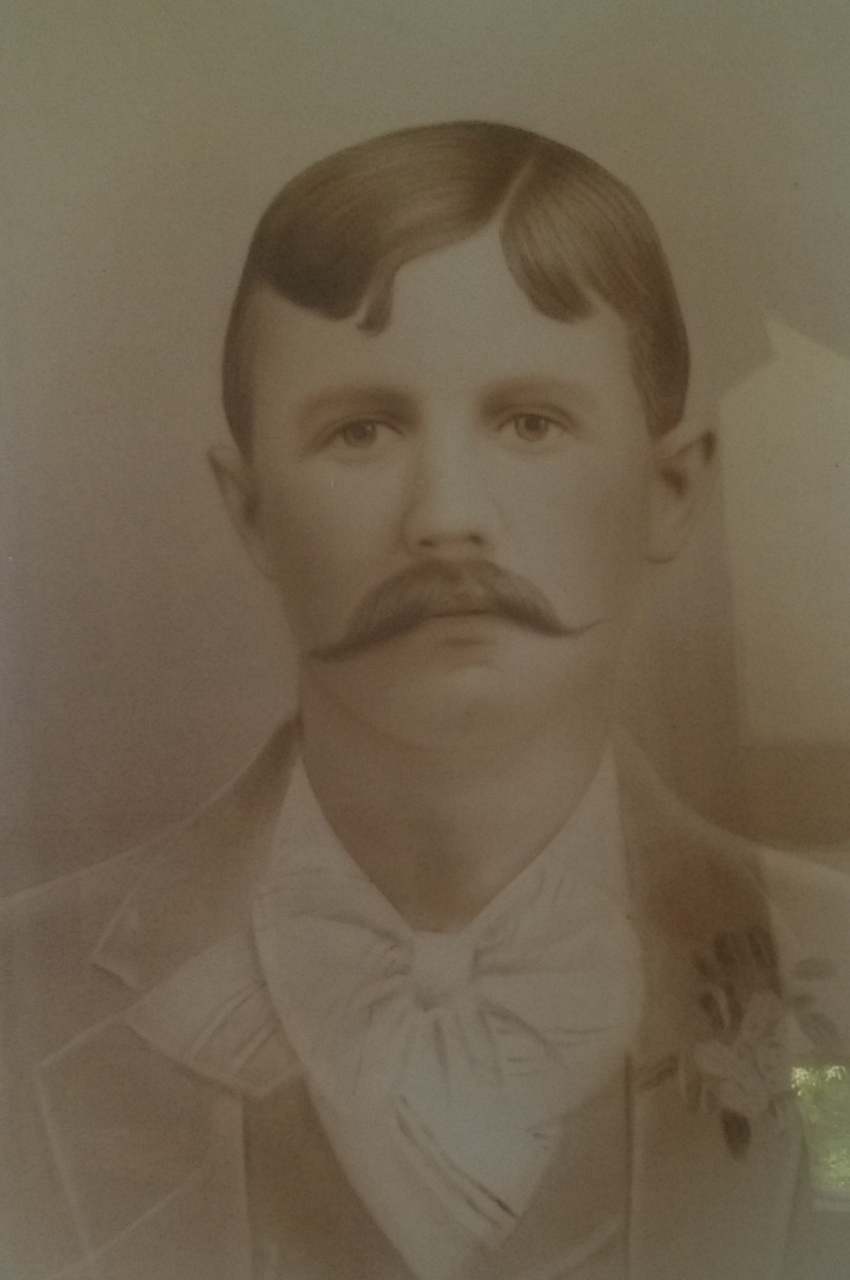
Charles W. Blackburn. Margarita’s Main Squeeze.

CharlesLBlackburn2

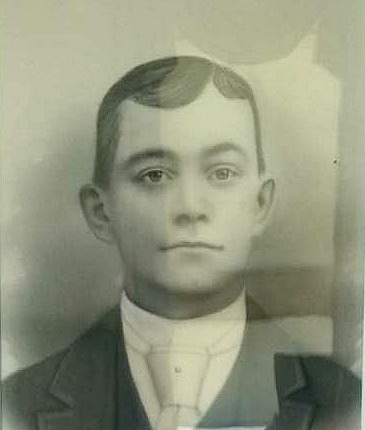
Charles Leonard Blackburn – eldest of C.W.’s children (from first marriage)

Charles Sr. got sick around 1911. He went to the National Home for Disabled Volunteer Soldiers in Sawtelle, CA, outside of Los Angeles. He had a Double Inguinal Hernia and prostate issues. If I read the chart correctly, he was there for 6 years until he was better.


CWBhospitalization

Charles Blackburn – Suffering from Double Inguinal Hernia. He appears to have stayed 6 years.

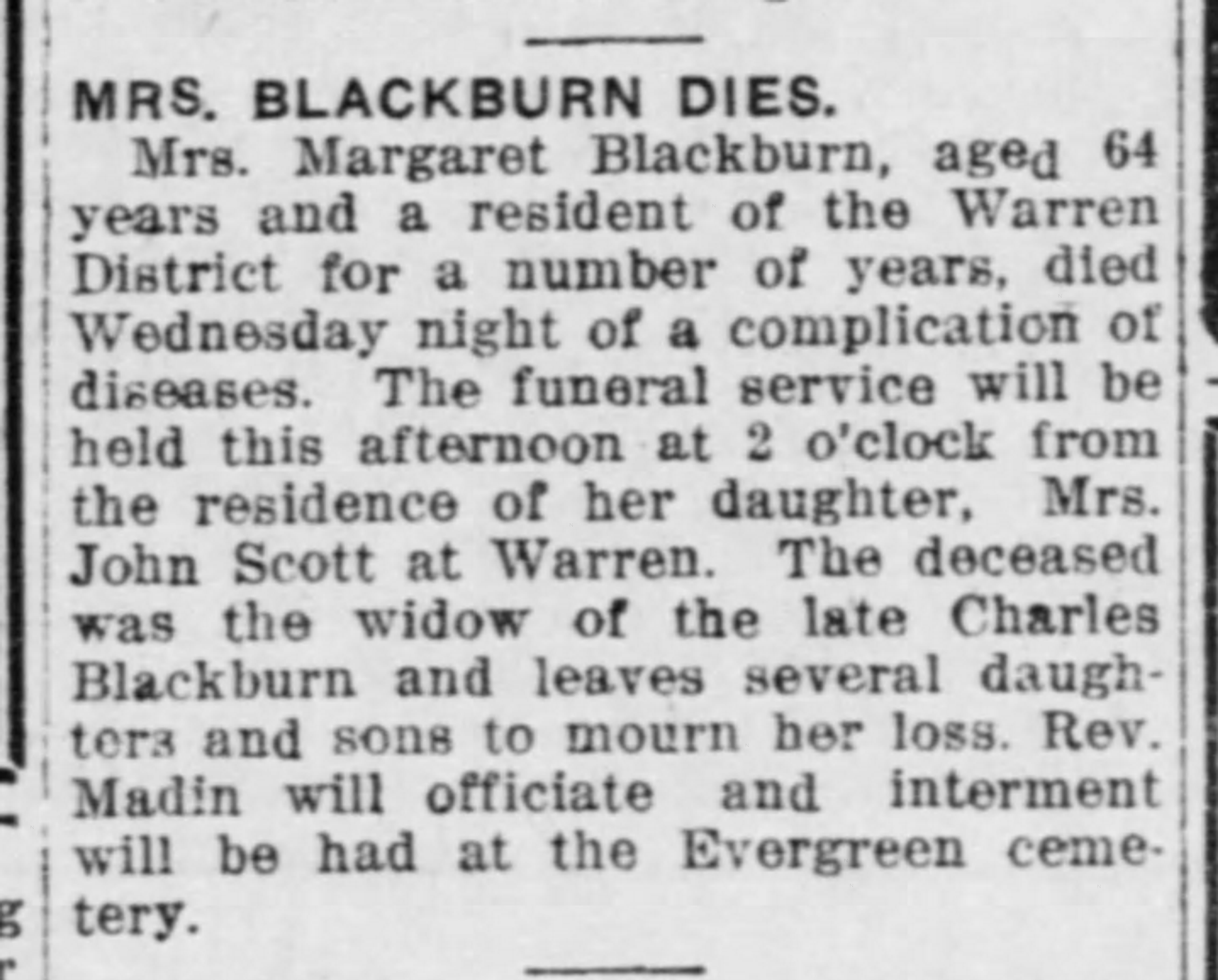
He was able to go home February, 1917. However, the homecoming happiness didn’t last long. Charles died at home on Sept. 26, 1917. There was a random (or purposeful) omission from the obit. His eldest son was not mentioned although Charles Leonard was still living in Tombstone at the time.

Bisbee_Daily_Review_Thu__Sep_27__1917_CWDEathannouncment

News of Mr. Blackburn’s passing.

Margarita did not live much longer than her husband. She passed away April 17, 1918 in Bisbee, Arizona.

Bisbee_Daily_Review_Fri__Apr_19__1918_margaret

Margarita dies of Acute Dilation of the Heart. (Cardiomyopathy) 1918

Margaret’s children go various ways after her death. A few stayed in Arizona and some ended up in California; Los Angeles, San Diego. In her lifetime, she witnessed the western frontier become more and more “civilized.” The gun fighters, miners, businessmen were all a part of her life at the southern most part of Arizona. It was only a territory up until the last 6 years of her life.

Margarita and her husband made the most of their lives in a place where few dared to tread.

azroute80pc002

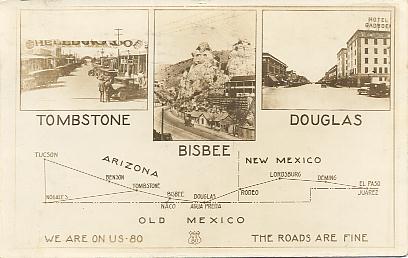
The Escalante’s living history on the US-80.


********

This blog post could NOT have been as full of great photos had it not been for Mrs. N. Womack-Rangel. Luckily for us, she is a family historian too. She and her family ventured to Tombstone a few weeks ago. She took the photos of the portraits in this piece. She is our cousin and descendant of Margarita’s brother, Alejandro, of whom I will write about next time. (Nice cliffhanger, no?)

TCSP

Out on a Family History excursion to the Tombstone Courthouse State Park, 2018.

Can’t wait to write about Alejandro’s branch next. This post should have been done a few weeks ago, but I kept finding more and more information on this new group.

Have a great July everyone!

Albert Charles Escalante – The Final Chapter

This should be the last blog post about my grandfather. I’m going to call him Tony in this round. You may have thought that it would end with the post about his last wife, Sara. Muahaha! You were wrong! He was interesting on his own. When I started my search for family history, I asked Grandma Sara for anything she could send to help me. She sent me Grandpa Tony’s second wallet which was full of all sorts of cool things. She also sent back most of the pictures she had of me as well, and that kind of hurt, but the gold in the wallet was worth it.

This blog is long but it should wrap up the last loose ends I have to share. Get some coffee, wrap up in a blanket, and enjoy.

So let’s see…..when we last left him, Tony was divorcing Manuela and marrying Sara. He and Manuela had a house in Tucson he built for her, but it was her mother that had put up the money for the property. So it was repeatedly mentioned by my great-grandmother that he took the money from the sale of that house. Tony pooled these monies from the divorce/house sale, with savings that Sara had, and they went in to the bar business.

Tony and Sara went to build a business called Tony’s Roundup. No one seems to have a photo of it though. My mom said Tony had the bar custom-built in the shape of a horseshoe. I’m not sure if it was in this bar, or the next, but he also had this print (below) on the wall. This was a commissioned piece for A-1 Beer. Can you see the A-1 branded on the horse? Tony had the A-1 on it fixed to say “ACE,” his chosen initials.

a-1_cowboys-dream_megargee

Lon Megargee Print for A-1 Beer.

Tony's Roundup2

Proof that Tony’s Roundup existed! Taken from the local directory Brawley Public Library.

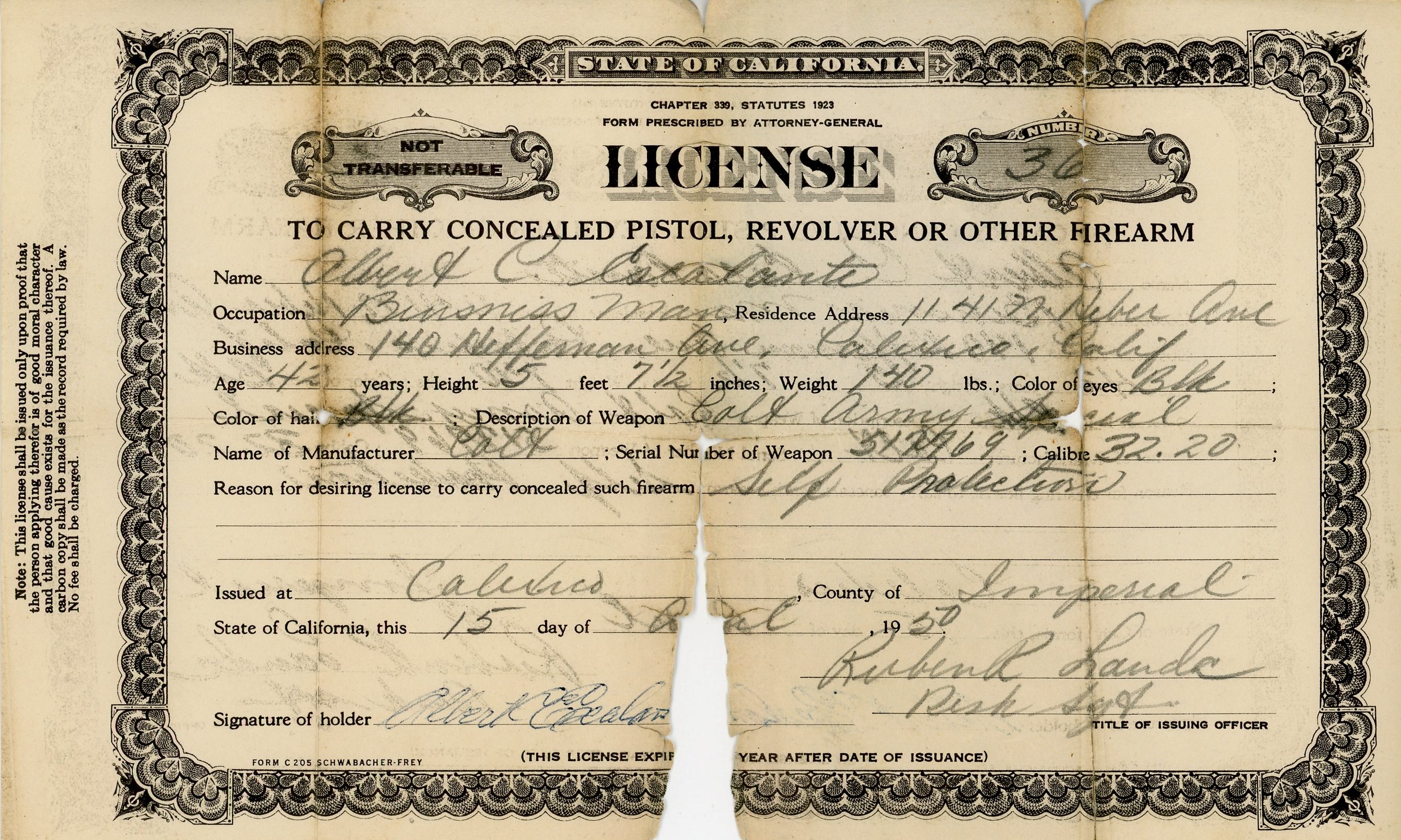
I love the below little treasure I found in his wallet. My mom grew up around guns. She thought she was Dale Evans. Pretty sure she still loves Roy Rogers. Tony respected guns. Being around possible drunks and rough-houser’s while in the bar business, he did have a permit to carry a concealed weapon. The business address was Escalante’s Bar. Both brothers had to carry large amounts of money home late at night. Safety made sense.
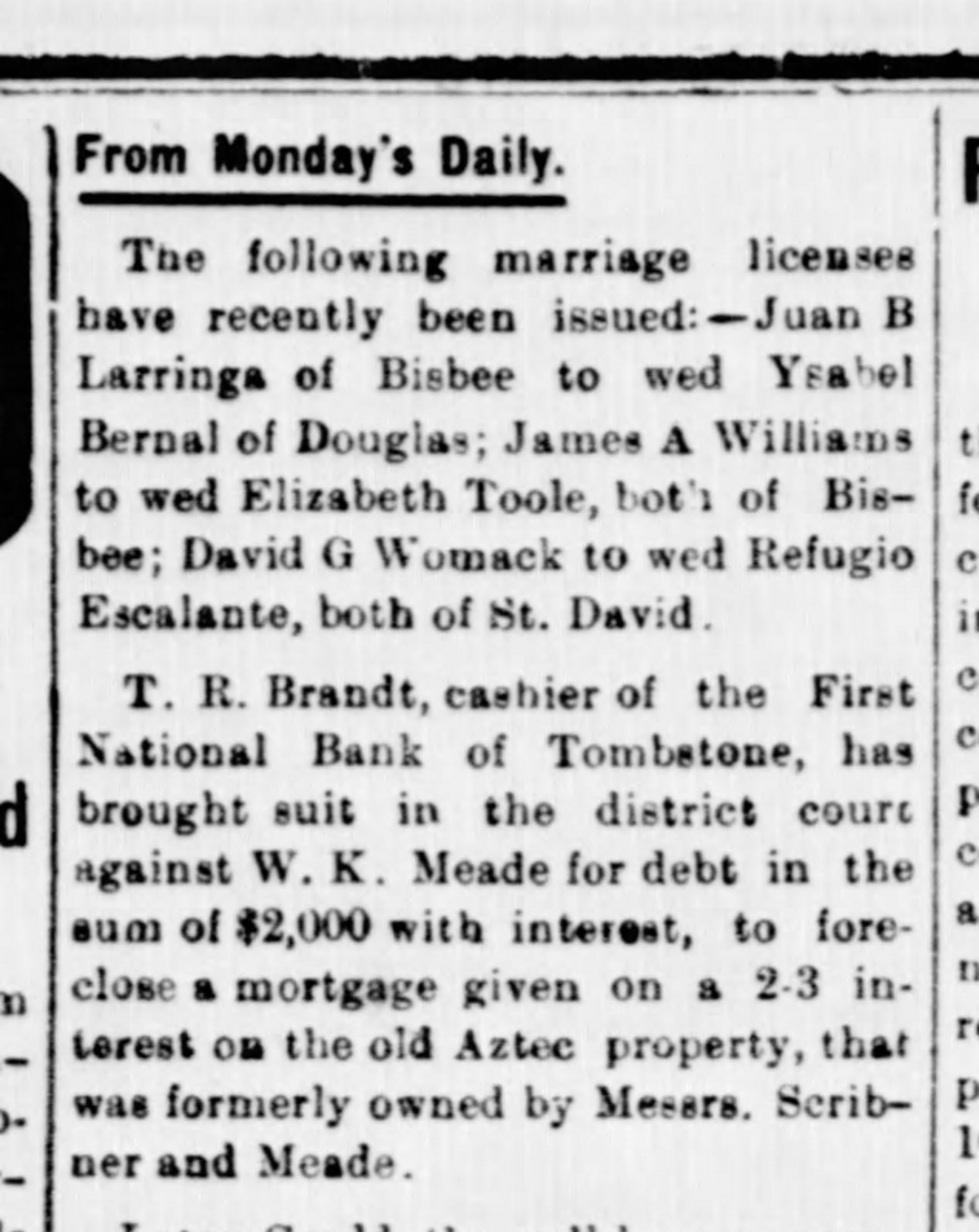
img254 (2)

Tony’s Concealed Carry Permit, 1950.

Rumor has it that Officer Ruben Ramirez Landa (whose name was listed as Issuing Officer), was a godfather to one of my uncles. OR Tony and Sara were godparents to one of his children. Let me show you how easy it is to swerve off course. I thought to myself: let’s do a quick search through ancestry and Google to try to find a picture of him.
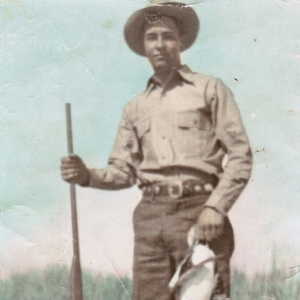
 

rubenlanda

Officer Ruben R. Landa.

Ruben became a Sheriff , ending his career as an officer for the Department of Justice. He died in San Diego in 1998. Handsome guy!

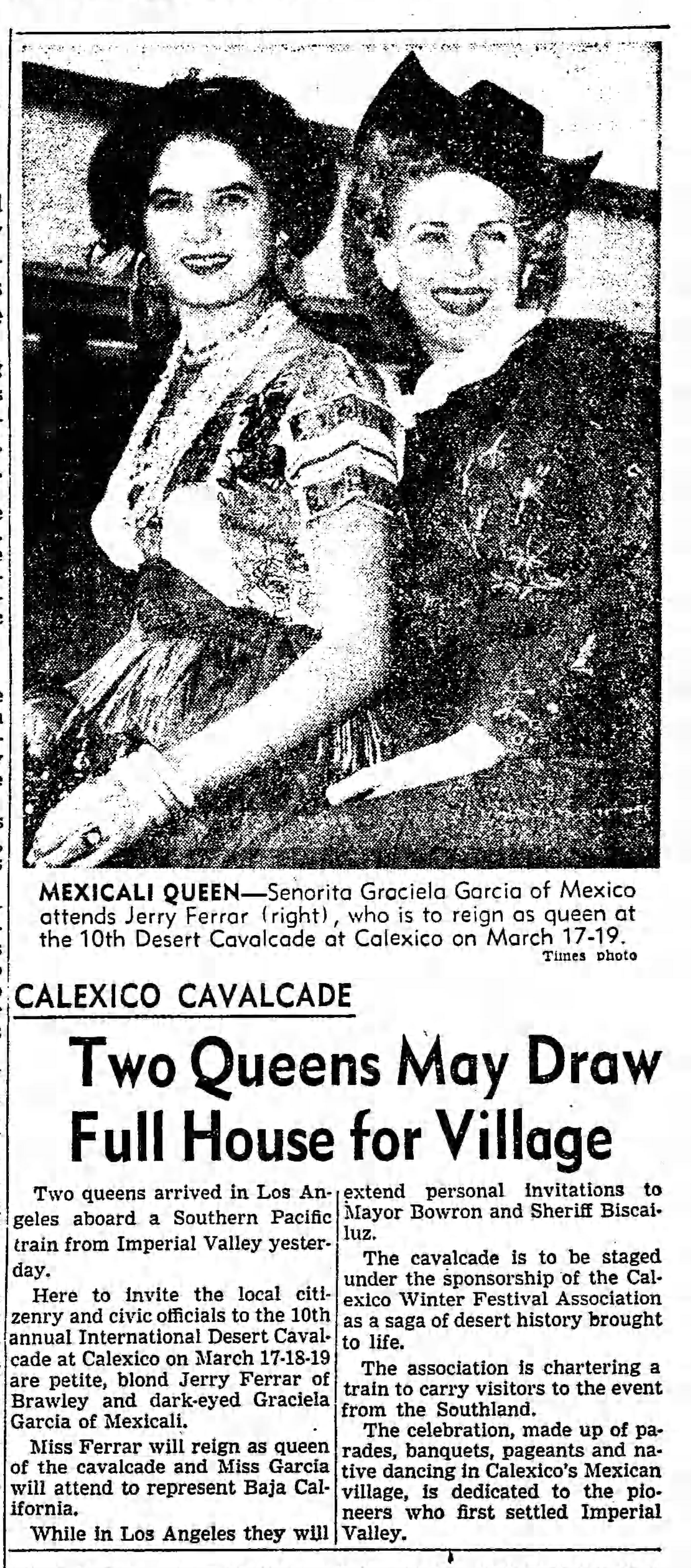
One of the events in Calexico, was the Calexico Desert Cavalcade. It was a yearly shindig that celebrated the friendship of the sister cities Calexico and Mexicali, and their shared histories. Governors from California, Baja California, and Sonora, Mexico, attended throughout the years.

The_Los_Angeles_Times_Mon__Mar_7__1949_

Article from the “L.A. Times,” March, 1949.

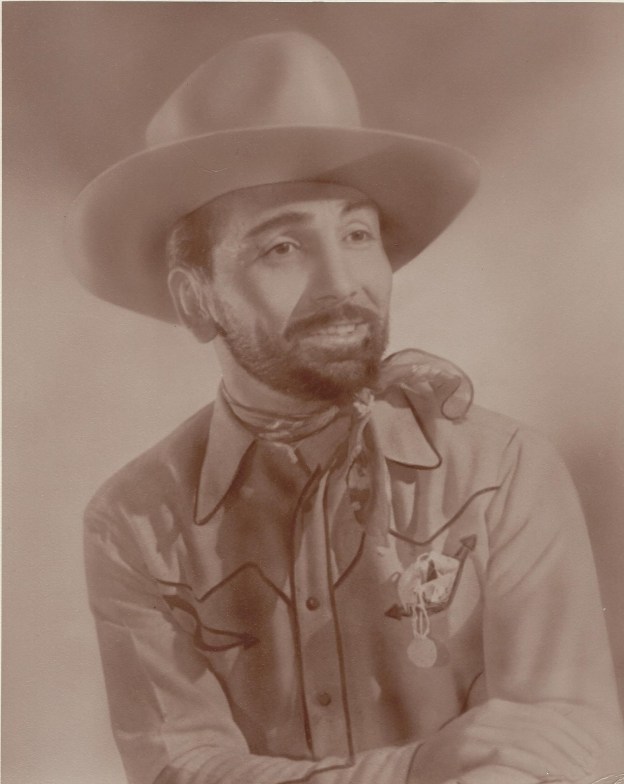
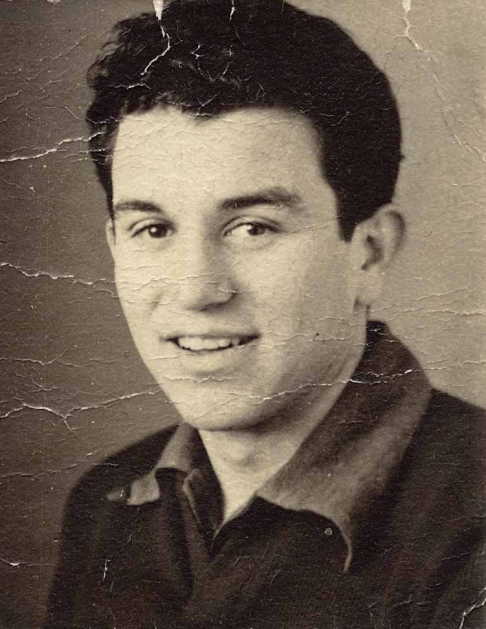
The event brought in many tourists. It also sparked “town spirit.” One of the more famous photos of Tony follows. He was all bedecked with western wear. He won First Place for best beard at the Cavalcade.

Albert Escalante My Dad's Brother 1947

Tony Escalante, 1947. Photo courtesy of E.E. Escalante.

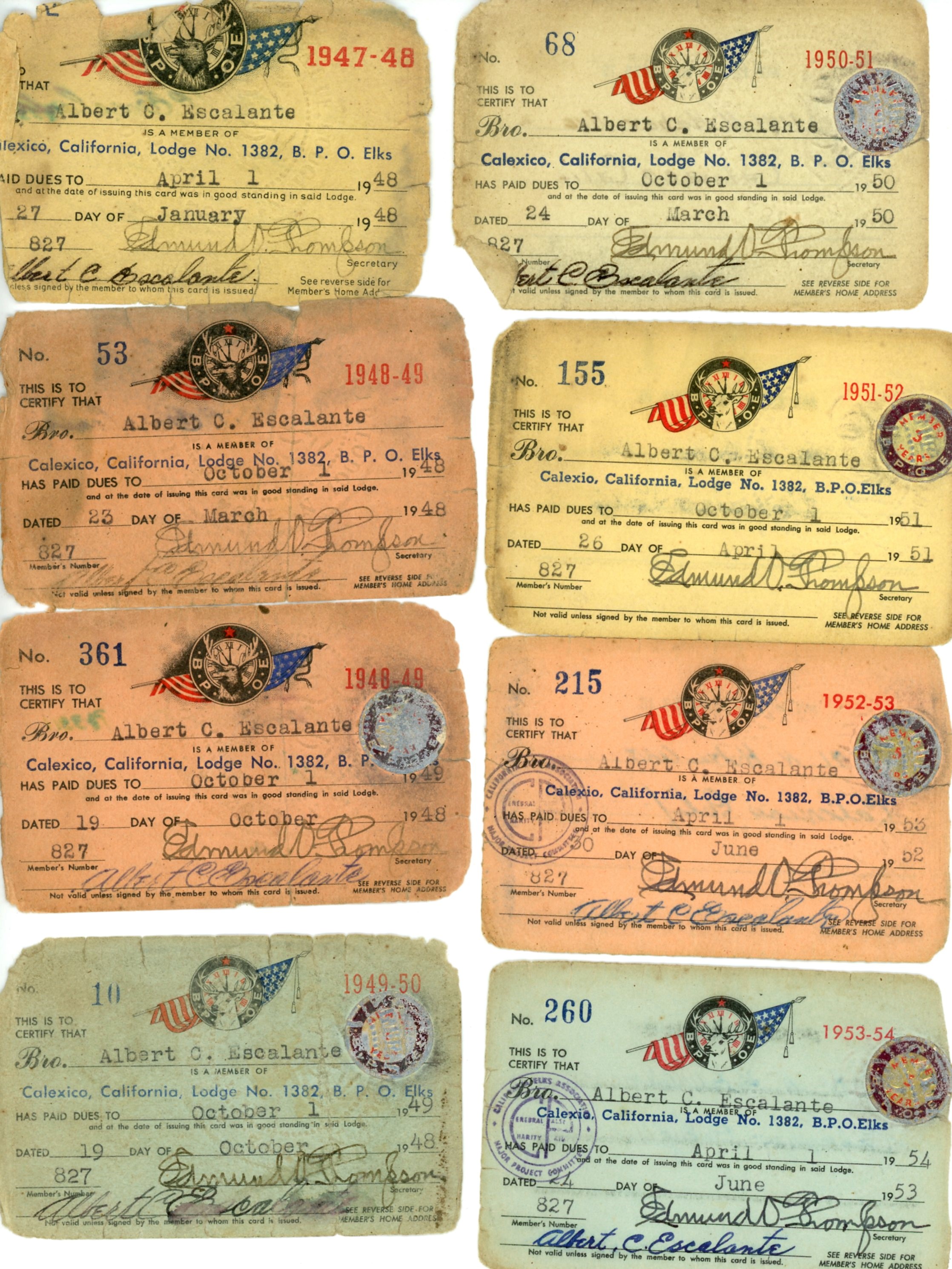
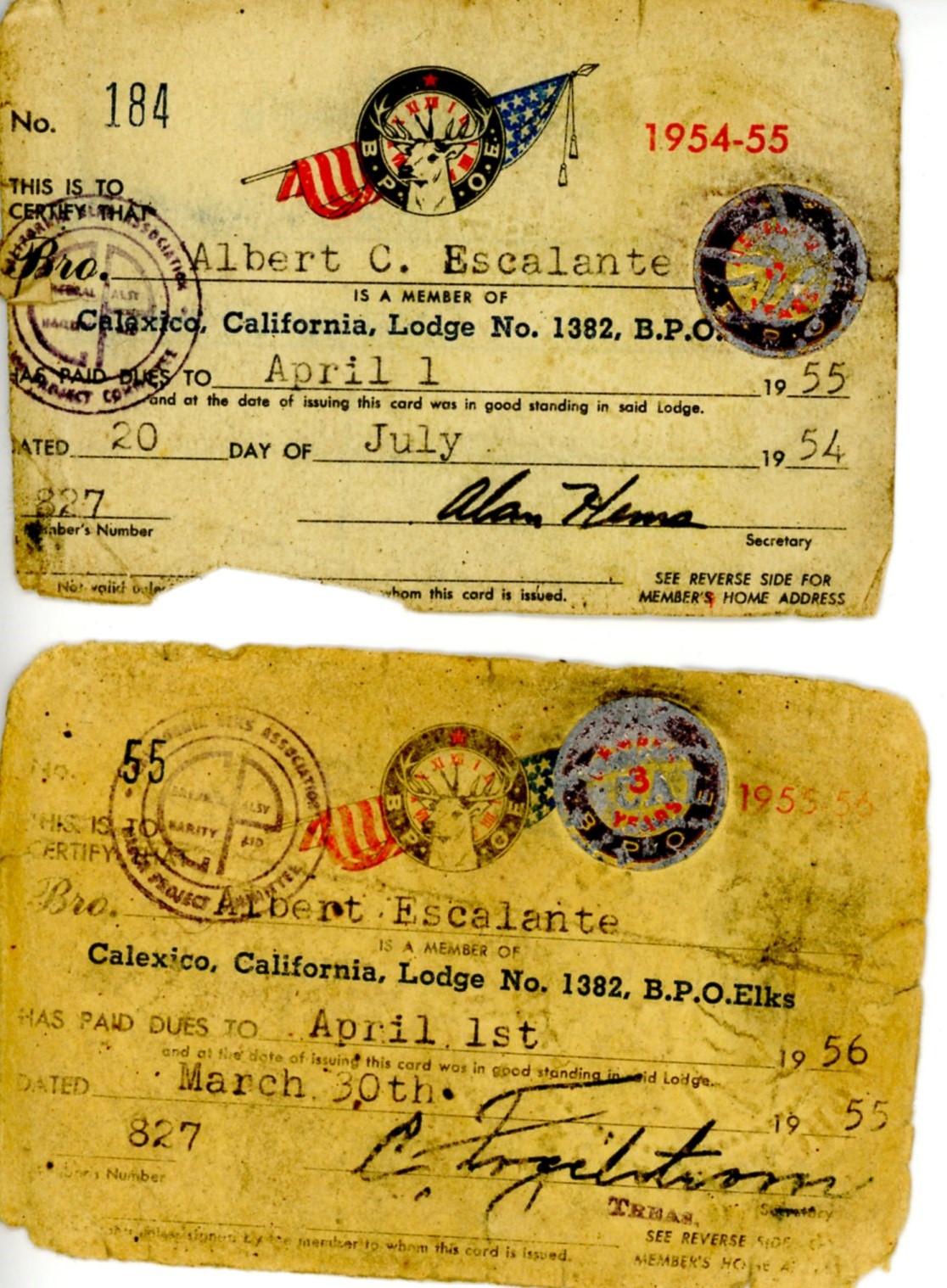
Settling into entrepreneurial life in Calexico, he joined the Elk’s Lodge. He was a member for almost 10 years.

img271

Tony’s Elk’s Lodge Membership Cards.

img272

April 1956 was last year as a Calexico Elk.

I tried to figure out why Tony decided to leave the Calexico area. My Uncle Jorge said it was because it was so hot in Imperial Valley. I’m not sure if Tony’s Roundup was failing, but they decided to pack it up and move to the cooler temps of Potrero, CA. Tony started a bar/restaurant across the border in Tecate, Mexico. They seem to have left Calexico around 1956. Behind him, the sign gives his hours as 7 am – 11 pm. Mexican and American food was served.

12-8-2004-3-06

Tony at his bar in Tecate, B.C.

This venture was successful. For a while. Profits were difficult to keep when you are a generous friend and when you loved to keep the party going with your friends. Tony’s dream of paying fewer taxes in Mexico were cut short by payola to officials. After a culmination of years, Tony’s business failed.

While they lived in Potrero, my mom attended a Catholic school in Tecate, Mexico, from 1956-57. She lost a year as she didn’t speak Spanish hardly at all, much less well enough to progress successfully in school. The kids were then put into Campo’s Mt. Empire School District from 1957 to about 1960. My last uncle was brought home in 1959 and adopted into the family because Tony and Sara fell in love with him on the way home. The family was complete. As Tony was known by a nickname, so were his boys: Tony, Buddy C’ckeye, Guy, Butch, Rocky and Jim)

The boys, who had a dad who worked sun up to sun down, were left to their own devices. The older brothers talk about running around the neighborhood. One accidentally set the house on fire after breaking a light bulb in the back room. He and another brother waited for the fire department to come while they sat on a hill. They would go out back and “harvest” whatever it was they wanted to eat for dinner. They would lie on the ground, pretend to be dead, and waited for buzzards to eat them. One uncle had a toe get cut off when he jumped on some glass. The toe was unable to be reattached as the dog had eaten it. Good times.

In the early part of 1960, Tony had a small “crisis.” He had a wife at home going through “the change.” His business had failed. He was feeling under the weather. He left. He was 53 years old at the time. He went to Flagstaff, Arizona. Tony had told my mom that if he ever thought he was dying, he would leave and not look back. My mom had gone to live with her grandmother in Tucson.  When she could not reach her dad via phone, she thought the worst and was terrified.

Stories report his journey to Flagstaff was two-fold. The first was to see a doctor. He was probably surprised to find out he was fine. My ABSOLUTELY un-authoritative thought is he was having panic attacks. Stress, mid-life crisis, career goals unfulfilled, a house full of family he needed to care for. Sounds about right. Adulting is very hard. The second reason he went there was to see if he could start a new business. After assessing his situation, weighing what he wanted versus what needed to be done, he decided to return to his family.

While he had been making these self-discoveries, Sara had taken the kids to her mom’s house. They stayed with Nana until Tony rejoined them. He was in it for the long haul.

He settled back into life where he started it, in Ventura County. More specifically, in Port Hueneme. He got a job at the lemon packing sheds. He did the whole Boy Scouts Dad thing. But remember, he was an older dad. He did his best.

img275


I did have a reader notice that the above paper was a Workman’s Comp Order. She asked what he had done to himself to require medical attention. So I asked my mom. Apparently, Tony was a lemon box assembly man. He managed to shoot himself in the hand with a nail gun. Small details! Interesting info!

And the rest is pretty much history. He lived out the rest of his life with his family. He worked to support them. His daughters had moved out and got married. His sons rocked sports in Port Hueneme. His daughters and sons got married. Grandchildren came in flocks, and were sent to the den when we got crazy. When family bonding got to be too much, he went to read in his bedroom. Or could he have been hiding?!? Gasp!

Here are few more things that were hiding in his wallet.

VariousCards

Various business cards Tony held on to. The Southwell’s were good friends of the family. German is his nephew-in-law.


BusinessCards2

Why was he needing so many lawyer cards? Hmmmm.

If anyone can tell me who any of the above people are, please do! I am dying to know.

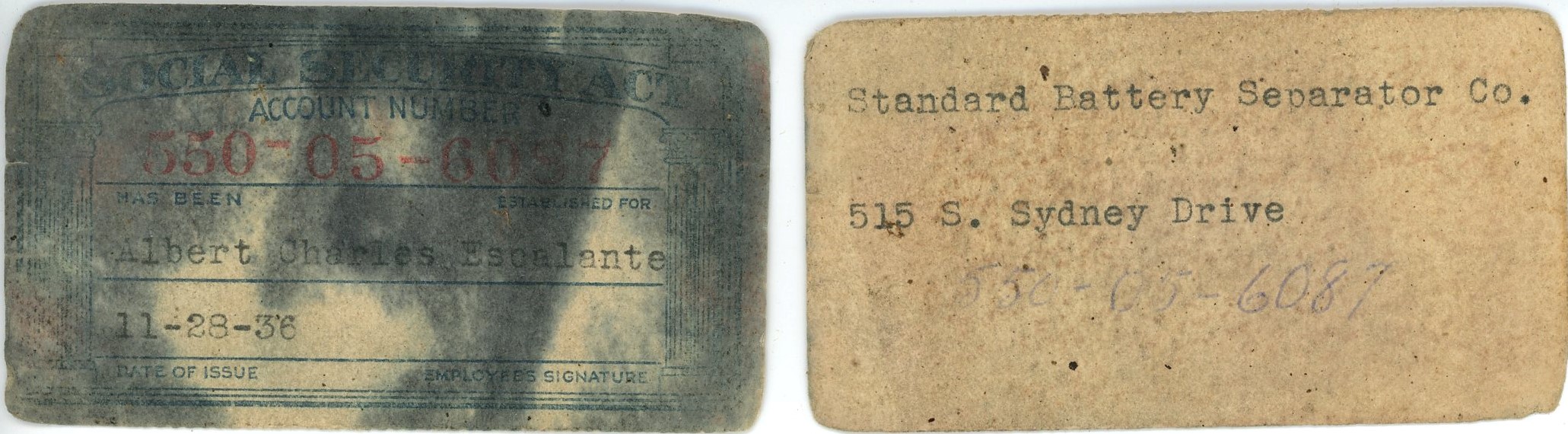
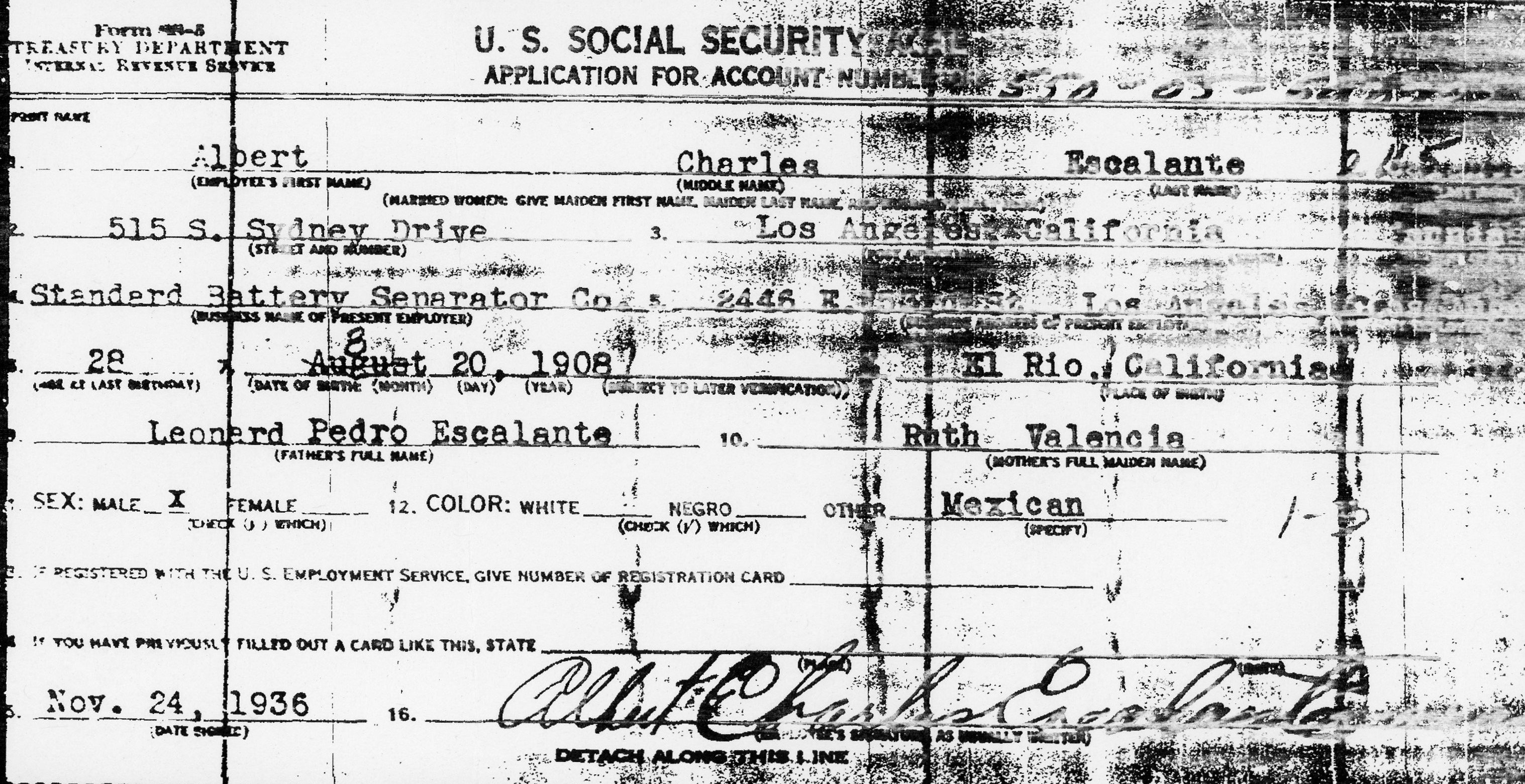
There was a card in his wallet with Standard Battery written on it. The name looked familiar. Digging through my paperwork I found what I was looking for. In 1936, Alberto Bernardo Escalante had become Albert Charles Escalante. Officially. He started his new job with his first wife, Edith. He kept the card in his wallet since 1936. He had even listed this location on his application for his Social Security Card. Sentimental guy….

img311

ACE’s original Social Security Card. The SBS Co. card.


img310

Tony’s original application for his Social Security Card.

How does a man with such a varied past get SO many people to love and respect him? My mom likes to remember his snarky comments under his breath. I told her he must have kept them well to himself though because so many people thought he was wonderful. We loved him. All of us.

Tony got sick. After a short illness, he passed away September 22, 1984. The family drifted a bit. I was 16 when I he passed. I was in my own world with priorities that weren’t necessarily family-oriented. When I finally had LOTS of questions to ask him, it was too late to do so. My search for family and their stories started around 5 years after his passing. I’m pretty sure my work will never be quite done.

papacollage

My Papa and I.

img276

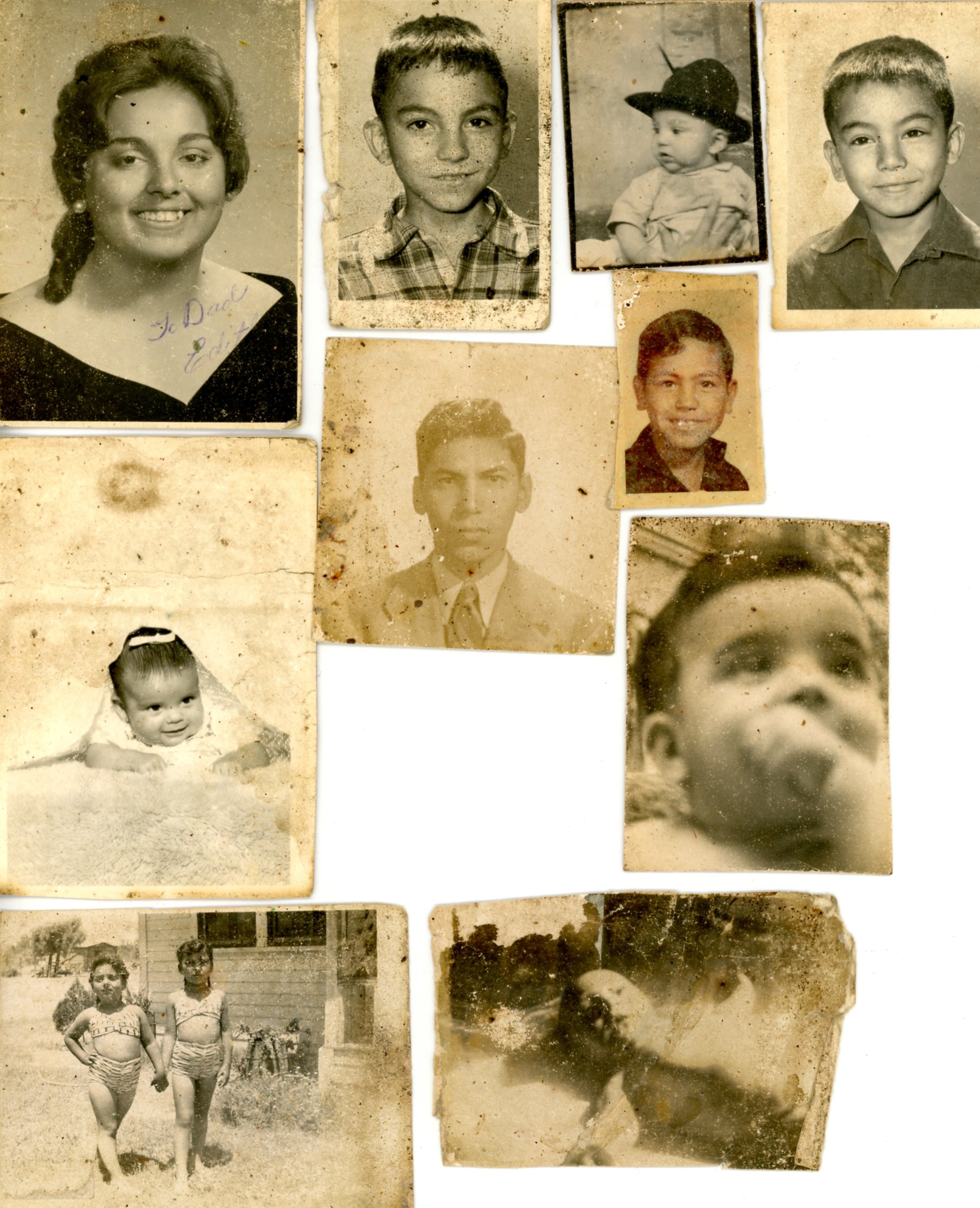
Photos of just a few of his kids and family, hiding in the wallet.

Mariana Bustamante – Mysterious Matriarch

Behind every man who thinks he is the patriarch of a clan (of children, in-laws, grandchildren) is the woman who bore the children for him. She nourished his off-spring in her body, she gave half of herself to create the child, she pushed the babe out into the world violently, and nurtured him so he would not die, but thrive.

One person that connects most mentioned in these posts was a woman. Her name was Maria Ana Bustamante. Her life happened so that the rest of us could be here. I know I have many a male family member who thinks that all of this was accomplished by their dad. Or granddad. Well, hooey! Mariana brought six children into the world. The three that I have been able to find created hundreds of off-spring.

When digging up family history, you start at the beginning. You confirm details. What doesn’t make logical sense gets filled in with what might be conventional thinking during the times. Mariana had two families. For many years, in my traditional mindset, I thought Leonardo Senior must have died. Mariana was so beautiful that she was swept off her feet by a new husband, who loved her with many children en tow.  The paper trail doesn’t lie though. This is my current hypothesis of Mariana’s journey.

Mariana Bustamante was the daughter of Jose Antonio Bustamante and Maria Soledad Salasar.

marianaleonardomg

Wedding registration for Leonardo Escalante and Mariana Bustamante, Hermosillo, Sonora.

She met Leonardo Escalante. In 1856, they married at the Catedral De La Asunción in Hermosillo, Sonora. From what I can tell, they had five children. I have only found two adult children from that marriage: Ana and Leonardo. The 1860s saw many children die at an early age. If only two survived, I cannot even imagine the emotional toll this must have taken upon her.

My great-grandfather was born in November, 1866. For Mariana, being a mother of the Escalante children did not last much longer. Either Mariana was suffering from: an abusive husband whom she could no longer tolerate, postpartum depression (5 babies in 11 years), or a sudden “heart full of love for a new man.” Which ever was her trouble, it killed her in 1867.


marianadeathhermosillo

Mariana’s Death Registration. 1867.

This document stated that Mariana, daughter of Antonio Bustamante and Soledad Salasar, died May 23, 1867. Her witness was one Juan Ramirez.

Either Mariana became a walking miracle, or she never really died. I believe that she went under the “protection” of  Señor Juan de la Resurrección Ramirez. What would make me think this? She and Juan had a baby girl together.

marialuisabernadinabaptism

Their daughter is baptized at the Cathedral in Hermosillo.

In 1870, Maria Luisa Bernadina Ramirez was christened.  This baby was born “H.N.” “hija natural” – which means Natural Daughter, not Legitimate Daughter (out of wedlock). Juan had either chosen not to marry her, or could not marry her because she was technically married.

This act of bringing their baby into town for a baptism was pretty daring. I have consulted with our cousin, M. Barbachano. She thinks that Leonardo Senior must have died at this point for the couple to bring their daughter out very brazenly to be baptized. My mom though that “preventing eternal damnation by baptism” was a strong motivator. We will probably never know.

Without a paper trail it is difficult to determine how long this couple was together. His home was in the original pueblo of Los Angeles, California. I often wonder if he vacationed in Hermosillo to visit his little family. Sadly, Juan Ramirez left Mariana behind permanently. He married a woman named Rosa Bustamante. I believe they were not related. I think the surname may be coincidental. He proceeded to live his life away from Sonora.

This did not stop Maria from making a good marriage. [I have grown up reading Jane Austen. Sometimes “status,” “parentage” could make or break a young woman’s future.] Maria Ramirez married Manuel A. Barbachano, the son of the Governor of Yucatan. [Not too shabby]. Most of the paperwork named Juan Ramirez prominently as Maria’s father. Mariana was only quietly mentioned, like a small whisper on the paper.

She finally reappears, in a newspaper at least, in 1901. Mariana moved with the Barbachano’s  from Mexico to San Diego where Manuel began his job as the head of Customs at the Tijuana border.

barbachanosarrive1901

Mariana appears! She accompanied her daughter and family to San Diego with Manuel’s reassignment. February, 1901.

While Mariana was with Maria, her Escalante children, Ana and Leonardo, and their families, were together in Ventura County. I believe that Ana was a mother figure to Leonardo all of the years he lived.

Mariana lived with the Barbachano’s for another 4 years. She died on November 5, 1905, in San Diego, CA. She was buried in Tijuana. There is no indication that Ana or Leonardo attended the funeral.

mariananewsjpgMINI

Maria’s Death Announcement in the San Diego Union, 1905.

I am grateful that Maria took care of her mother all of those years. They must have only had each other. I will blog about Maria’s father later because his link to California history is fascinating. I believe he was a cad in his treatment of Mariana. That being said, he did assist (a tiny bit) in creating the Barbachano Dynasty.

barbachano50th

Maria and Manuel sit center stage at their 50th wedding anniversary party.

After the death of Mariana and Leonardo Jr, half-sisters Ana and Maria managed to reconnect. They ended up close. Ana died in the house in the photograph above in 1948. (5289 Canterbury Drive, San Diego, CA.) The Barbachano’s and Romo’s were close family, at the end. My grandfather used to take his kids to Rosarito beach to camp for holidays. Up at the Rosarito Beach Hotel, he could have introduced himself to his cousins. He never did. I feel we truly lost an opportunity for all of Mariana’s grandchildren to get to know each other. And stay connected.

legacy2

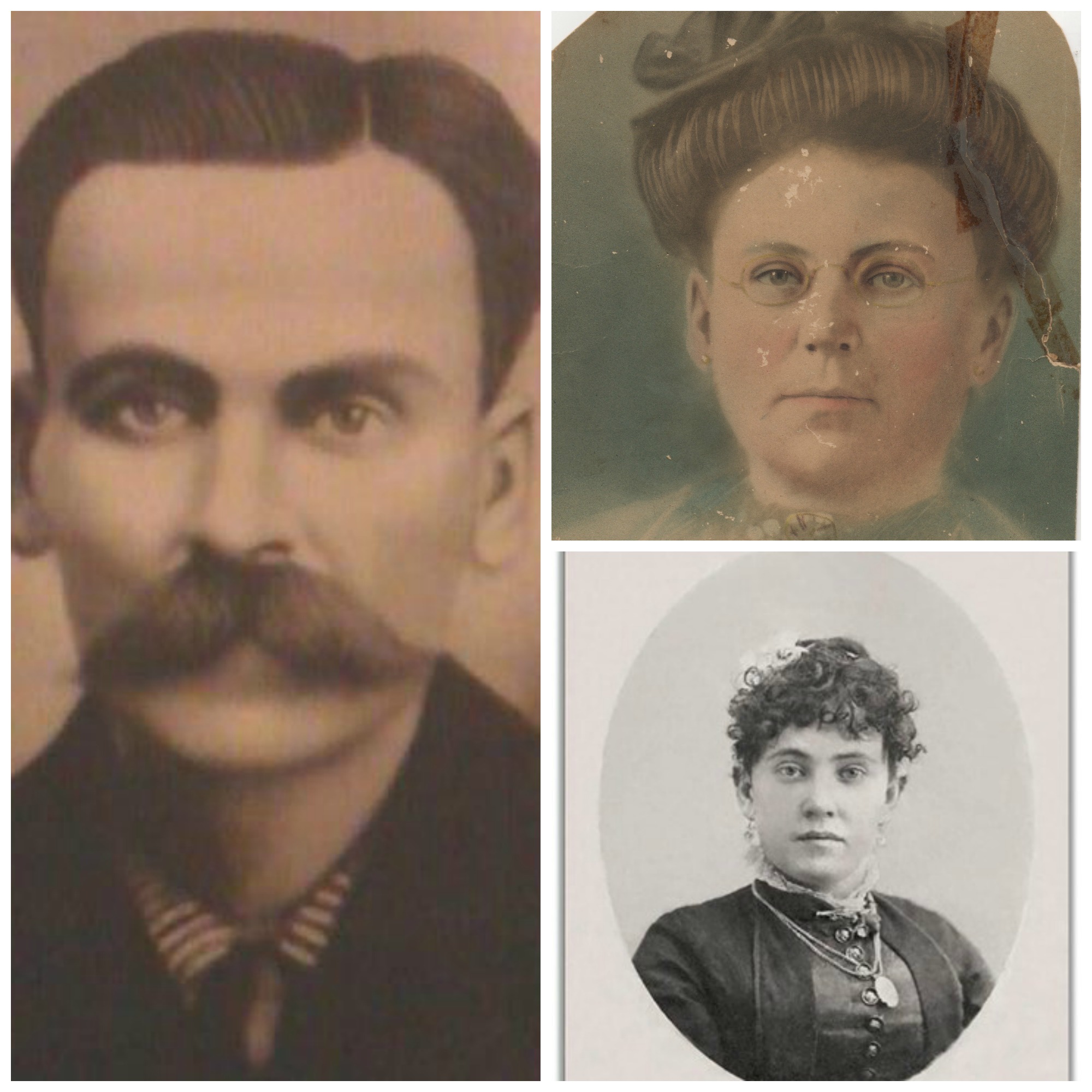
Mariana’s Legacy: Leonardo, Ana (Top Right), Maria (Bottom Right).